What do Vietnamese people say about electric vehicles – A detailed market share analysis for the first half of 2024
What do Vietnamese people say about electric vehicles – A detailed market share analysis for the first half of 2024
What do Vietnamese people say about electric vehicles – A detailed market share analysis for the first half of 2024
|
Analytics
Analytics
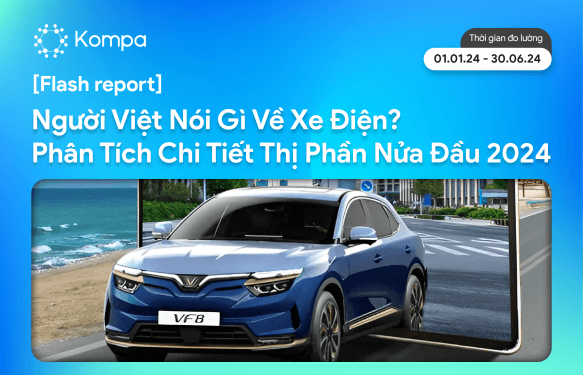
The electric vehicle market, both domestic and international, is experiencing strong growth, with a series of prominent brands joining the race. This report, based on Kompa’s Social Listening data measured from 1/1/2024 to 6/30/2024, presents key observations accompanied by supporting figures, helping clarify the trends shaping the EV market as well as reference recommendations for brands during effective market positioning.
1. VinFast: Leading the domestic race
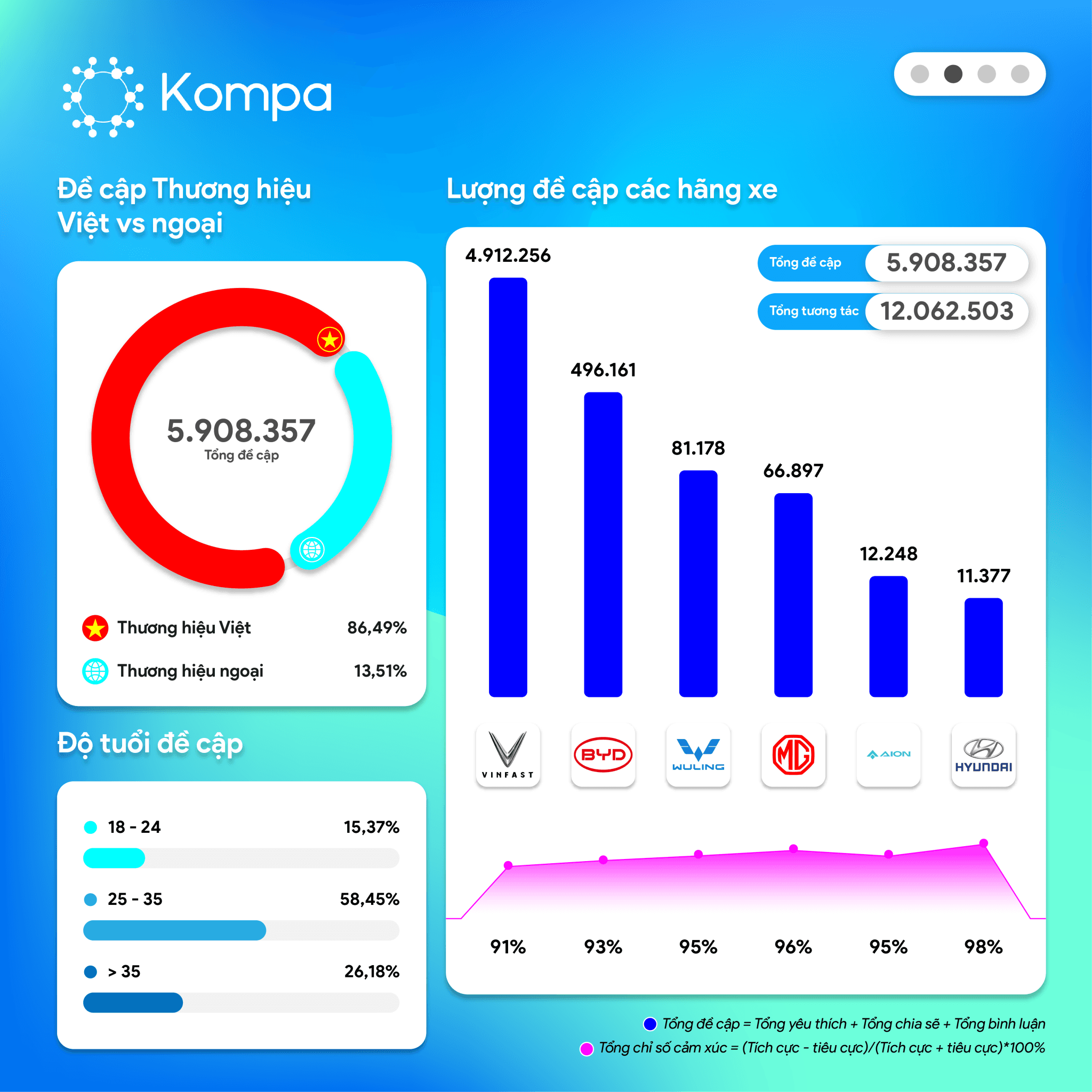
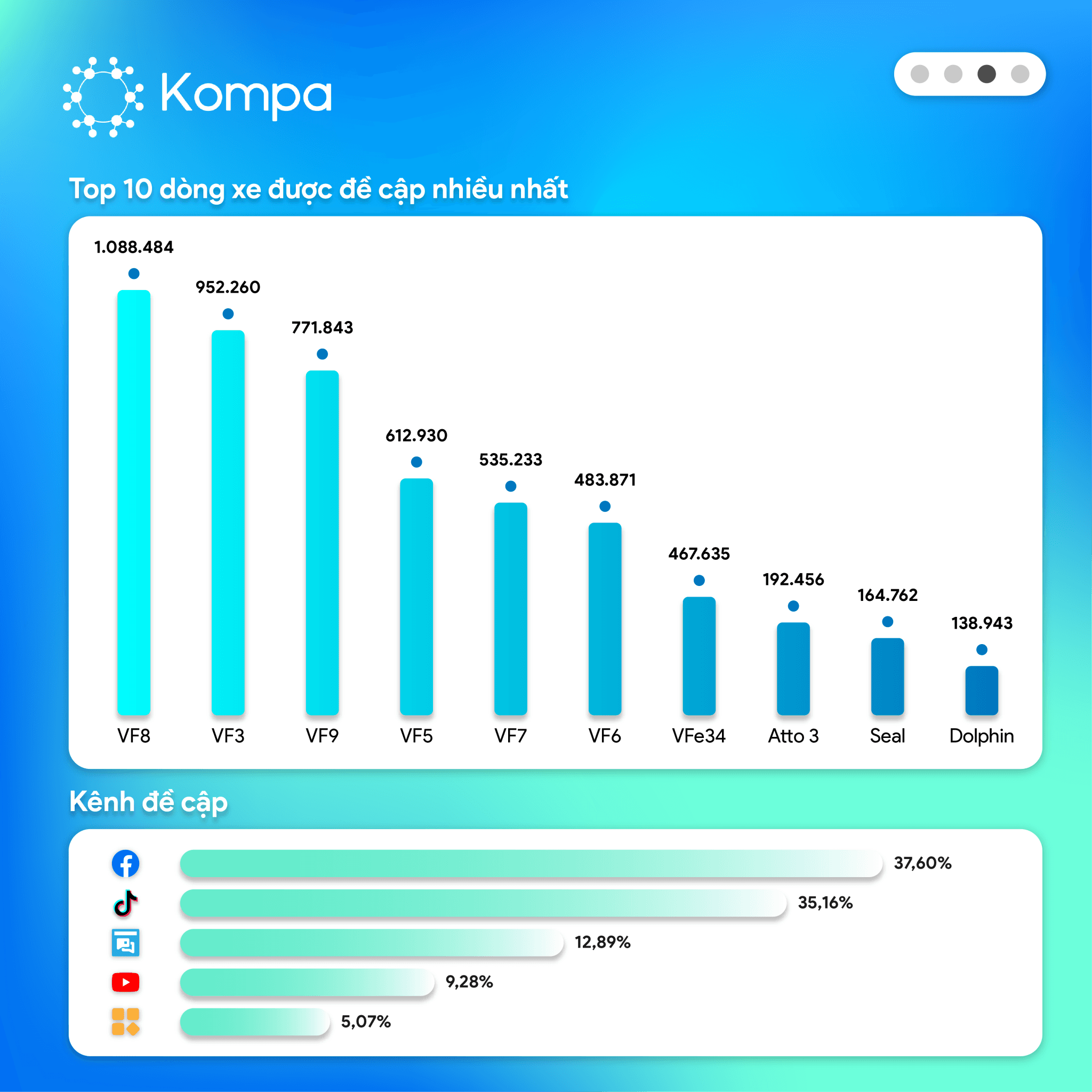
VinFast continues to maintain its leading position in Vietnam. Models such as VFe34 and VF6 received 467,635 and 483,871 mentions, respectively. In addition, models VF7, VF5, VF9, VF3, and VF8 also achieved impressive figures, with 1,088,484 discussions for VF8 and 952,260 for VF3.
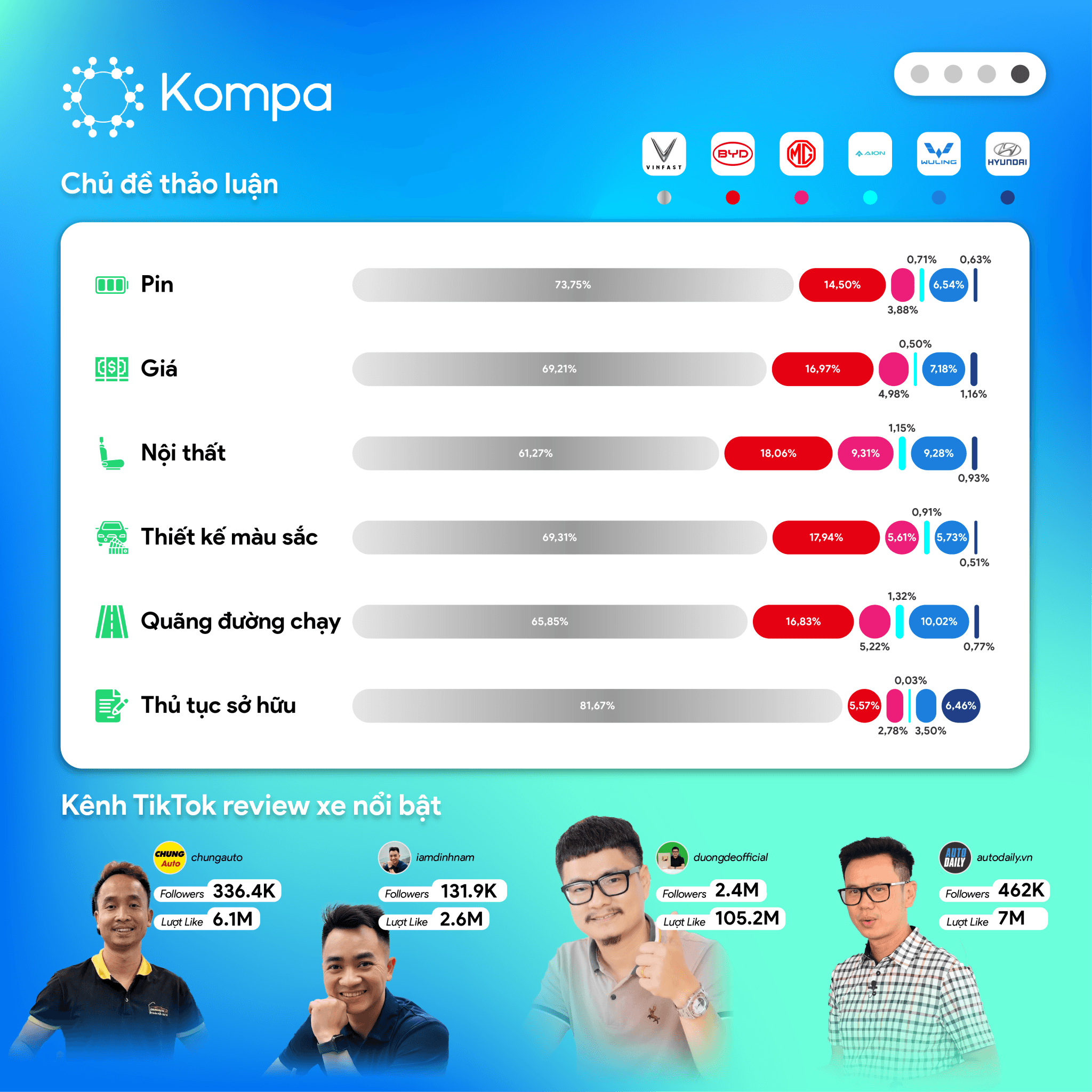
One factor that drives frequent mentions of VinFast is battery technology. According to Social Listening data, battery-related factors account for 45% of discussions about VinFast, especially when compared with models from international competitors such as BYD. This shows that consumers are not only interested in the brand but also pay special attention to technological improvements that enhance performance.
2. International competitors: BYD and challenges in the Vietnamese market
BYD, with standout models such as Atto 3 and Seal, attracted 192,456 and 164,762 mentions. However, compared to VinFast, BYD’s discussion share is significantly lower. The factor users focus on when comparing VinFast and BYD is interior design (BYD accounts for 35% of discussions related to vehicle interiors).
In the context of international competition, BYD needs to focus on adjusting its communications strategy to build a stronger presence in Vietnam. Notably, interest in battery technology in BYD models reaches only 25%, lower than VinFast, indicating that the need for battery technology improvements remains a challenge for foreign brands.
3. Consumer trends: Interest in batteries and technology
Not only brands, but technology factors are also at the center of discussions. Vietnamese consumers do not hesitate to compare factors such as battery capacity, charging time, and sustainability when evaluating EV models. This is clearly reflected in the fact that the keyword “battery” and related technology factors consistently appear at high frequency in social media discussions.
For VinFast, this is one of the key differentiators when users evaluate and compare models. Lithium-ion batteries are currently favored thanks to their energy storage capacity and high durability. However, the development of solid-state batteries—capable of shortening charging time and extending lifespan—will be the factor shaping the future of the market.
4. The 25–35 age group: Dominating discussions and increasing interest – a golden opportunity for brands to boost communications
Data shows that the 25–35 age group discusses and shows interest in EVs the most, accounting for 58.45% of total discussions. This group is at an age with strong financial capability and a tendency to care about technology, while also tending to make purchase decisions based on factors such as sustainability and vehicle features.
The 18–24 group accounts for 15.37%, with a growing trend in demand for learning about and considering EV use. Brands should focus on creating dynamic communication campaigns suited to this segment’s lifestyle and preferences, such as TikTok campaigns, to drive brand awareness.
5. The influence of the TikTok channel in the EV sector
TikTok has become an important channel for introducing and reviewing EVs. Prominent EV review channels on TikTok not only provide detailed information about models but also create a community of young consumers that is easy to reach and can spread information quickly. Brands can leverage these channels to increase product awareness and connect with potential customers.
Conclusion
The domestic and international EV market is growing strongly, with VinFast asserting its dominance in the Vietnamese market thanks to continuous innovation in technology and products. Meanwhile, international brands such as BYD are gradually finding ways to penetrate the local market, but they will need greater efforts to convince consumers.
In the first six months of 2024, battery technology was the core factor shaping competition. EV manufacturers need to continue improving and communicating the superiority of their technologies to attract and retain consumers.
Suggested reference communication strategies for brands
For EV brands to attract and retain customers, implementing appropriate communication strategies is essential:
Emphasize advanced battery technology: Consumers are increasingly interested in EV battery performance and charging time. Promoting improvements in battery technology, especially solid-state batteries, will help build customer trust and interest.
Green brand campaigns: EVs are favored for their environmental friendliness. Therefore, brands should focus on campaigns that emphasize sustainability and reducing environmental impact through EVs.
Increase experiential events: Creating opportunities for consumers to experience EVs through test-drive events will help them better understand the technology and product features, thereby encouraging purchase decisions.
Use multi-channel digital platforms: Leverage social media, video, and interactive content platforms to enhance brand awareness and connect with consumers.
Testimonials from real customers: Presenting real stories and reviews from consumers who have used EVs is an effective way to build trust.
Focus on the 25–35 target group: This is a customer segment with financial capacity and high demand for EV products. Marketing campaigns should be built to target this group’s needs, with content focused on technology and features.
The electric vehicle market, both domestic and international, is experiencing strong growth, with a series of prominent brands joining the race. This report, based on Kompa’s Social Listening data measured from 1/1/2024 to 6/30/2024, presents key observations accompanied by supporting figures, helping clarify the trends shaping the EV market as well as reference recommendations for brands during effective market positioning.
1. VinFast: Leading the domestic race
VinFast continues to maintain its leading position in Vietnam. Models such as VFe34 and VF6 received 467,635 and 483,871 mentions, respectively. In addition, models VF7, VF5, VF9, VF3, and VF8 also achieved impressive figures, with 1,088,484 discussions for VF8 and 952,260 for VF3.
One factor that drives frequent mentions of VinFast is battery technology. According to Social Listening data, battery-related factors account for 45% of discussions about VinFast, especially when compared with models from international competitors such as BYD. This shows that consumers are not only interested in the brand but also pay special attention to technological improvements that enhance performance.
2. International competitors: BYD and challenges in the Vietnamese market
BYD, with standout models such as Atto 3 and Seal, attracted 192,456 and 164,762 mentions. However, compared to VinFast, BYD’s discussion share is significantly lower. The factor users focus on when comparing VinFast and BYD is interior design (BYD accounts for 35% of discussions related to vehicle interiors).
In the context of international competition, BYD needs to focus on adjusting its communications strategy to build a stronger presence in Vietnam. Notably, interest in battery technology in BYD models reaches only 25%, lower than VinFast, indicating that the need for battery technology improvements remains a challenge for foreign brands.
3. Consumer trends: Interest in batteries and technology
Not only brands, but technology factors are also at the center of discussions. Vietnamese consumers do not hesitate to compare factors such as battery capacity, charging time, and sustainability when evaluating EV models. This is clearly reflected in the fact that the keyword “battery” and related technology factors consistently appear at high frequency in social media discussions.
For VinFast, this is one of the key differentiators when users evaluate and compare models. Lithium-ion batteries are currently favored thanks to their energy storage capacity and high durability. However, the development of solid-state batteries—capable of shortening charging time and extending lifespan—will be the factor shaping the future of the market.
4. The 25–35 age group: Dominating discussions and increasing interest – a golden opportunity for brands to boost communications
Data shows that the 25–35 age group discusses and shows interest in EVs the most, accounting for 58.45% of total discussions. This group is at an age with strong financial capability and a tendency to care about technology, while also tending to make purchase decisions based on factors such as sustainability and vehicle features.
The 18–24 group accounts for 15.37%, with a growing trend in demand for learning about and considering EV use. Brands should focus on creating dynamic communication campaigns suited to this segment’s lifestyle and preferences, such as TikTok campaigns, to drive brand awareness.
5. The influence of the TikTok channel in the EV sector
TikTok has become an important channel for introducing and reviewing EVs. Prominent EV review channels on TikTok not only provide detailed information about models but also create a community of young consumers that is easy to reach and can spread information quickly. Brands can leverage these channels to increase product awareness and connect with potential customers.
Conclusion
The domestic and international EV market is growing strongly, with VinFast asserting its dominance in the Vietnamese market thanks to continuous innovation in technology and products. Meanwhile, international brands such as BYD are gradually finding ways to penetrate the local market, but they will need greater efforts to convince consumers.
In the first six months of 2024, battery technology was the core factor shaping competition. EV manufacturers need to continue improving and communicating the superiority of their technologies to attract and retain consumers.
Suggested reference communication strategies for brands
For EV brands to attract and retain customers, implementing appropriate communication strategies is essential:
Emphasize advanced battery technology: Consumers are increasingly interested in EV battery performance and charging time. Promoting improvements in battery technology, especially solid-state batteries, will help build customer trust and interest.
Green brand campaigns: EVs are favored for their environmental friendliness. Therefore, brands should focus on campaigns that emphasize sustainability and reducing environmental impact through EVs.
Increase experiential events: Creating opportunities for consumers to experience EVs through test-drive events will help them better understand the technology and product features, thereby encouraging purchase decisions.
Use multi-channel digital platforms: Leverage social media, video, and interactive content platforms to enhance brand awareness and connect with consumers.
Testimonials from real customers: Presenting real stories and reviews from consumers who have used EVs is an effective way to build trust.
Focus on the 25–35 target group: This is a customer segment with financial capacity and high demand for EV products. Marketing campaigns should be built to target this group’s needs, with content focused on technology and features.
The electric vehicle market, both domestic and international, is experiencing strong growth, with a series of prominent brands joining the race. This report, based on Kompa’s Social Listening data measured from 1/1/2024 to 6/30/2024, presents key observations accompanied by supporting figures, helping clarify the trends shaping the EV market as well as reference recommendations for brands during effective market positioning.
1. VinFast: Leading the domestic race
VinFast continues to maintain its leading position in Vietnam. Models such as VFe34 and VF6 received 467,635 and 483,871 mentions, respectively. In addition, models VF7, VF5, VF9, VF3, and VF8 also achieved impressive figures, with 1,088,484 discussions for VF8 and 952,260 for VF3.
One factor that drives frequent mentions of VinFast is battery technology. According to Social Listening data, battery-related factors account for 45% of discussions about VinFast, especially when compared with models from international competitors such as BYD. This shows that consumers are not only interested in the brand but also pay special attention to technological improvements that enhance performance.
2. International competitors: BYD and challenges in the Vietnamese market
BYD, with standout models such as Atto 3 and Seal, attracted 192,456 and 164,762 mentions. However, compared to VinFast, BYD’s discussion share is significantly lower. The factor users focus on when comparing VinFast and BYD is interior design (BYD accounts for 35% of discussions related to vehicle interiors).
In the context of international competition, BYD needs to focus on adjusting its communications strategy to build a stronger presence in Vietnam. Notably, interest in battery technology in BYD models reaches only 25%, lower than VinFast, indicating that the need for battery technology improvements remains a challenge for foreign brands.
3. Consumer trends: Interest in batteries and technology
Not only brands, but technology factors are also at the center of discussions. Vietnamese consumers do not hesitate to compare factors such as battery capacity, charging time, and sustainability when evaluating EV models. This is clearly reflected in the fact that the keyword “battery” and related technology factors consistently appear at high frequency in social media discussions.
For VinFast, this is one of the key differentiators when users evaluate and compare models. Lithium-ion batteries are currently favored thanks to their energy storage capacity and high durability. However, the development of solid-state batteries—capable of shortening charging time and extending lifespan—will be the factor shaping the future of the market.
4. The 25–35 age group: Dominating discussions and increasing interest – a golden opportunity for brands to boost communications
Data shows that the 25–35 age group discusses and shows interest in EVs the most, accounting for 58.45% of total discussions. This group is at an age with strong financial capability and a tendency to care about technology, while also tending to make purchase decisions based on factors such as sustainability and vehicle features.
The 18–24 group accounts for 15.37%, with a growing trend in demand for learning about and considering EV use. Brands should focus on creating dynamic communication campaigns suited to this segment’s lifestyle and preferences, such as TikTok campaigns, to drive brand awareness.
5. The influence of the TikTok channel in the EV sector
TikTok has become an important channel for introducing and reviewing EVs. Prominent EV review channels on TikTok not only provide detailed information about models but also create a community of young consumers that is easy to reach and can spread information quickly. Brands can leverage these channels to increase product awareness and connect with potential customers.
Conclusion
The domestic and international EV market is growing strongly, with VinFast asserting its dominance in the Vietnamese market thanks to continuous innovation in technology and products. Meanwhile, international brands such as BYD are gradually finding ways to penetrate the local market, but they will need greater efforts to convince consumers.
In the first six months of 2024, battery technology was the core factor shaping competition. EV manufacturers need to continue improving and communicating the superiority of their technologies to attract and retain consumers.
Suggested reference communication strategies for brands
For EV brands to attract and retain customers, implementing appropriate communication strategies is essential:
Emphasize advanced battery technology: Consumers are increasingly interested in EV battery performance and charging time. Promoting improvements in battery technology, especially solid-state batteries, will help build customer trust and interest.
Green brand campaigns: EVs are favored for their environmental friendliness. Therefore, brands should focus on campaigns that emphasize sustainability and reducing environmental impact through EVs.
Increase experiential events: Creating opportunities for consumers to experience EVs through test-drive events will help them better understand the technology and product features, thereby encouraging purchase decisions.
Use multi-channel digital platforms: Leverage social media, video, and interactive content platforms to enhance brand awareness and connect with consumers.
Testimonials from real customers: Presenting real stories and reviews from consumers who have used EVs is an effective way to build trust.
Focus on the 25–35 target group: This is a customer segment with financial capacity and high demand for EV products. Marketing campaigns should be built to target this group’s needs, with content focused on technology and features.
You might be interested
Vietnam’s securities industry – when AI begins to shape investor behavior
Vietnam’s securities industry – when AI begins to shape investor behavior
Imported food industry - decoding Vietnamese consumer behavior
Imported food industry - decoding Vietnamese consumer behavior

[Case Study] How leading brands measure campaign effectiveness
[Case Study] How leading brands measure campaign effectiveness
The mid-2025 box office race: Who is redefining the audience experience?
The mid-2025 box office race: Who is redefining the audience experience?
The 2025 cosmetics market amid a wave of counterfeit goods: What do brands need to do to earn consumers' trust?
The 2025 cosmetics market amid a wave of counterfeit goods: What do brands need to do to earn consumers' trust?
Sign up to receive reports
Sign up to receive reports
Sign up to receive reports


From Social Listening to AI Data Intelligence:
Helping businesses make smart, fast, and comprehensive decisions.
Hotline: 098.130.6460 (Kompa Sales)
Contact for services, quotations, or media partnerships: info@kompa.ai






Copyright © 2025 Kompa.
All Rights Reserved
From Social Listening to AI Data Intelligence:
Helping businesses make smart, fast, and comprehensive decisions.
Hotline: 098.130.6460 (Kompa Sales)
Contact for services, quotations, or media partnerships: info@kompa.ai
Copyright © 2025 Kompa.
All Rights Reserved
From Social Listening to AI Data Intelligence:
Helping businesses make smart, fast, and comprehensive decisions.
Hotline: 098.130.6460 (Kompa Sales)
Contact for services, quotations, or media partnerships: info@kompa.ai
Copyright © 2025 Kompa.
All Rights Reserved