The importance of customer insights from social media
The importance of customer insights from social media
The importance of customer insights from social media
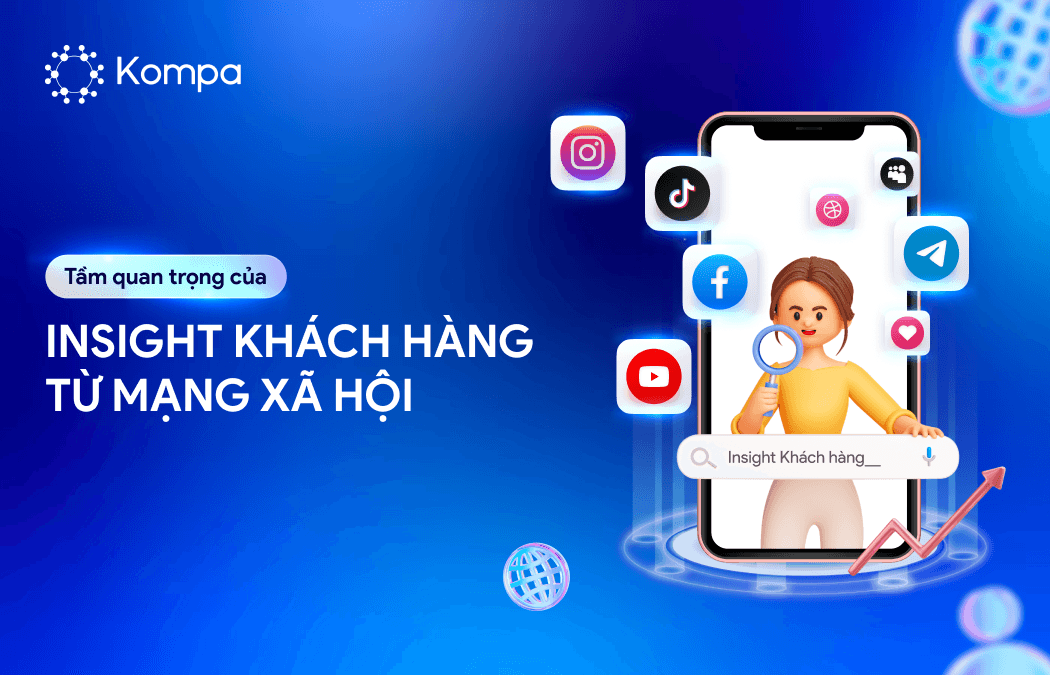
Social media is not only a place where users “entertain themselves” or “interact,” but also a living data repository containing countless valuable insights, revealing a consumer portrait in an authentic, natural, and real-time way. Insights from social media are valuable not only because of their large volume, but because they reflect users’ real emotions, behaviors, and expectations in everyday life contexts. Importantly, when leveraged properly, social media insights can become a “game changer” for communication strategy and brand positioning—from shaping messages and creating content to activating consumer emotions and actions.
What types of insights can brands extract from social media?
Social media is where consumers share emotions, recount real experiences, spread viewpoints, and respond to brands very naturally. If brands listen deeply enough and analyze in the right direction, they can gather many types of insights to adjust communications, develop products, or reposition the brand. Below are 4 common and essential insight groups that can be extracted from social media users’ behavior and discussions:
Consumer Truth – Deep truths about consumers
Social media users often express very human, very genuine desires—such as wanting to take better care of themselves, wanting peace of mind for their families, or simply wanting to feel confident. Social media users share these emotions through public posts about content they love, social trends, hot topics drawing widespread community attention, and more. This insight helps brands create emotional content that touches the real reasons customers care.
Tension Insight – Unresolved conflicts
On social media, users not only share what they like, but also often reveal their hesitation, indecision, and inner conflict in consumption choices—such as wanting to eat healthy but lacking time to cook, wanting to buy quality products but fearing they’ll exceed budget, or wanting a minimalist lifestyle but being unable to resist the urge to “checkout discounted deals.” Users express these “tensions” through posts sharing real experiences, comments in consumer groups, and reviews under unboxing videos. These signals help brands identify emotional and psychological barriers, thereby creating solutions better suited to customers’ real contexts and building more empathetic, relatable content.
Cultural/Social Insight – Cultural and social truths
Social media is where users not only consume information, but also create and spread new cultural values. In each post, hashtag, short-lived trend, or prolonged debate, people reveal how they view society, themselves, and the norms they follow—or try to break.
From trends like “normalizing failure,” “quitting to heal,” to waves of support for diverse body types, ethnicities, and genders—all begin with personal sharing but quickly become a collective voice. That is when cultural insight takes shape. Understanding cultural insight helps brands not only blend in but also guide dialogue with the community—in a civilized, empathetic, and timely way.
Brand Insight – How users perceive a brand
In the online world, brands are no longer “defined” by themselves—but by consumers’ experiences and perceptions. They may not say much, but a short comment, an "unboxing" video, or a story retold on TikTok can be enough for the community to form impressions and evaluate the brand. Brand insight helps brands reflect on themselves through the customer lens—to understand what strengths to further develop and what areas still need improvement.
Are insights from social media truly valuable?
The answer is yes—and beyond expectations—if brands know how to leverage them properly. Compared with traditional surveys, which are delayed and often formalistic, social media reflects consumers’ thoughts and emotions in real time and in natural contexts. This is a highly authentic data source —because social media users tend to share good and bad experiences, expectations and disappointments, helping brands see both the visible and hidden sides of consumer psychology.
Not only that, social media insights have practical value across product development, brand positioning, communication content building, and optimizing every touchpoint in the customer journey. Thanks to their immediacy and multidimensionality, these insights also help brands respond faster to market changes, catch trends at the right time, and manage communication crises.
How to extract customer insights from social media
1. Social Listening
Social Listening is a foundational method for brands to understand the landscape of public opinion and customer sentiment in real time. Brands can monitor millions of public conversations across platforms such as Facebook, TikTok, Instagram, Threads, and YouTube. Tracking keywords related to the brand, category, product, or social issues helps brands capture content trends and identify existing pain points in the customer journey. In addition, Social Listening helps analyze user sentiment (positive, negative, neutral), thereby providing a comprehensive view of how the brand is being received and how its performance compares with competitors.
2. Analyze UGC (User-Generated Content)
UGC—content created by users—is a vivid and authentic data source where customers share personal feelings about products, services, or their consumption experiences. These authentic posts, videos, or comments help brands identify customers’ real experiences more clearly instead of relying only on internal assumptions. Beyond that, UGC also reflects emotional values customers associate with the brand—such as trust, joy, or a sense of safety. When analyzing large volumes of UGC, brands can also detect recurring content patterns—valuable material for guiding content creativity or optimizing products.
3. Analyze community content and discussion groups
Specialized communities and groups on social media such as “Nghiện nhà,” “Tâm sự eva,” or niche groups (new moms, office workers, gamers, startups, etc.) are places where users reveal genuine thoughts and discuss more deeply than on open platforms. This is a valuable insight source that helps brands explore group-based consumption behavior, distinctive preferences, or hidden purchase drivers. In personal sharing and everyday stories, brands can detect unmet needs. More importantly, group discussions also help brands clearly understand product use contexts in real life, thereby improving user experience.
4. Apply AI/ML technologies to process big data
With the massive amount of data generated daily from social media, using artificial intelligence (AI) and machine learning technologies is essential for effective analysis. AI not only helps brands classify topics and filter noisy content, but can also detect emerging trends, segment consumers by behavior, and even build models to forecast future trends (predictive insight). When properly trained, AI can “read” customer emotions and provide strategic recommendations suited to each stage of the buying journey.
With over 20 years of experience, Kompa has built a comprehensive data ecosystem, combining Artificial Intelligence (AI), Natural Language Processing (NLP), and real-time analytics systems to deliver a modern AI-Driven Social Listening solution. Beyond collecting and aggregating information, Kompa helps businesses interpret – predict – act based on market signals.
From early trend detection, consumer sentiment analysis, and brand health measurement to communication risk identification, Kompa delivers deep, flexible, and agile perspectives, creating an outstanding competitive advantage for businesses in a constantly changing digital era.
Customer insights from social media: An indispensable key for brands to stay resilient in the digital era
Consumer behavior, emotions, and beliefs all leave traces on social media; strategic listening not only helps brands understand users accurately, but also stay ahead of the market. However, extracting insights from social media requires technological capability, deep analytical thinking, and sensitivity to socio-cultural context. This is exactly when platforms like Kompa become trusted data partners, helping businesses not only “hear” but also “understand clearly and act correctly”—so that every communication decision and every message launched to market matches consumer expectations.
Social media is not only a place where users “entertain themselves” or “interact,” but also a living data repository containing countless valuable insights, revealing a consumer portrait in an authentic, natural, and real-time way. Insights from social media are valuable not only because of their large volume, but because they reflect users’ real emotions, behaviors, and expectations in everyday life contexts. Importantly, when leveraged properly, social media insights can become a “game changer” for communication strategy and brand positioning—from shaping messages and creating content to activating consumer emotions and actions.
What types of insights can brands extract from social media?
Social media is where consumers share emotions, recount real experiences, spread viewpoints, and respond to brands very naturally. If brands listen deeply enough and analyze in the right direction, they can gather many types of insights to adjust communications, develop products, or reposition the brand. Below are 4 common and essential insight groups that can be extracted from social media users’ behavior and discussions:
Consumer Truth – Deep truths about consumers
Social media users often express very human, very genuine desires—such as wanting to take better care of themselves, wanting peace of mind for their families, or simply wanting to feel confident. Social media users share these emotions through public posts about content they love, social trends, hot topics drawing widespread community attention, and more. This insight helps brands create emotional content that touches the real reasons customers care.
Tension Insight – Unresolved conflicts
On social media, users not only share what they like, but also often reveal their hesitation, indecision, and inner conflict in consumption choices—such as wanting to eat healthy but lacking time to cook, wanting to buy quality products but fearing they’ll exceed budget, or wanting a minimalist lifestyle but being unable to resist the urge to “checkout discounted deals.” Users express these “tensions” through posts sharing real experiences, comments in consumer groups, and reviews under unboxing videos. These signals help brands identify emotional and psychological barriers, thereby creating solutions better suited to customers’ real contexts and building more empathetic, relatable content.
Cultural/Social Insight – Cultural and social truths
Social media is where users not only consume information, but also create and spread new cultural values. In each post, hashtag, short-lived trend, or prolonged debate, people reveal how they view society, themselves, and the norms they follow—or try to break.
From trends like “normalizing failure,” “quitting to heal,” to waves of support for diverse body types, ethnicities, and genders—all begin with personal sharing but quickly become a collective voice. That is when cultural insight takes shape. Understanding cultural insight helps brands not only blend in but also guide dialogue with the community—in a civilized, empathetic, and timely way.
Brand Insight – How users perceive a brand
In the online world, brands are no longer “defined” by themselves—but by consumers’ experiences and perceptions. They may not say much, but a short comment, an "unboxing" video, or a story retold on TikTok can be enough for the community to form impressions and evaluate the brand. Brand insight helps brands reflect on themselves through the customer lens—to understand what strengths to further develop and what areas still need improvement.
Are insights from social media truly valuable?
The answer is yes—and beyond expectations—if brands know how to leverage them properly. Compared with traditional surveys, which are delayed and often formalistic, social media reflects consumers’ thoughts and emotions in real time and in natural contexts. This is a highly authentic data source —because social media users tend to share good and bad experiences, expectations and disappointments, helping brands see both the visible and hidden sides of consumer psychology.
Not only that, social media insights have practical value across product development, brand positioning, communication content building, and optimizing every touchpoint in the customer journey. Thanks to their immediacy and multidimensionality, these insights also help brands respond faster to market changes, catch trends at the right time, and manage communication crises.
How to extract customer insights from social media
1. Social Listening
Social Listening is a foundational method for brands to understand the landscape of public opinion and customer sentiment in real time. Brands can monitor millions of public conversations across platforms such as Facebook, TikTok, Instagram, Threads, and YouTube. Tracking keywords related to the brand, category, product, or social issues helps brands capture content trends and identify existing pain points in the customer journey. In addition, Social Listening helps analyze user sentiment (positive, negative, neutral), thereby providing a comprehensive view of how the brand is being received and how its performance compares with competitors.
2. Analyze UGC (User-Generated Content)
UGC—content created by users—is a vivid and authentic data source where customers share personal feelings about products, services, or their consumption experiences. These authentic posts, videos, or comments help brands identify customers’ real experiences more clearly instead of relying only on internal assumptions. Beyond that, UGC also reflects emotional values customers associate with the brand—such as trust, joy, or a sense of safety. When analyzing large volumes of UGC, brands can also detect recurring content patterns—valuable material for guiding content creativity or optimizing products.
3. Analyze community content and discussion groups
Specialized communities and groups on social media such as “Nghiện nhà,” “Tâm sự eva,” or niche groups (new moms, office workers, gamers, startups, etc.) are places where users reveal genuine thoughts and discuss more deeply than on open platforms. This is a valuable insight source that helps brands explore group-based consumption behavior, distinctive preferences, or hidden purchase drivers. In personal sharing and everyday stories, brands can detect unmet needs. More importantly, group discussions also help brands clearly understand product use contexts in real life, thereby improving user experience.
4. Apply AI/ML technologies to process big data
With the massive amount of data generated daily from social media, using artificial intelligence (AI) and machine learning technologies is essential for effective analysis. AI not only helps brands classify topics and filter noisy content, but can also detect emerging trends, segment consumers by behavior, and even build models to forecast future trends (predictive insight). When properly trained, AI can “read” customer emotions and provide strategic recommendations suited to each stage of the buying journey.
With over 20 years of experience, Kompa has built a comprehensive data ecosystem, combining Artificial Intelligence (AI), Natural Language Processing (NLP), and real-time analytics systems to deliver a modern AI-Driven Social Listening solution. Beyond collecting and aggregating information, Kompa helps businesses interpret – predict – act based on market signals.
From early trend detection, consumer sentiment analysis, and brand health measurement to communication risk identification, Kompa delivers deep, flexible, and agile perspectives, creating an outstanding competitive advantage for businesses in a constantly changing digital era.
Customer insights from social media: An indispensable key for brands to stay resilient in the digital era
Consumer behavior, emotions, and beliefs all leave traces on social media; strategic listening not only helps brands understand users accurately, but also stay ahead of the market. However, extracting insights from social media requires technological capability, deep analytical thinking, and sensitivity to socio-cultural context. This is exactly when platforms like Kompa become trusted data partners, helping businesses not only “hear” but also “understand clearly and act correctly”—so that every communication decision and every message launched to market matches consumer expectations.
Social media is not only a place where users “entertain themselves” or “interact,” but also a living data repository containing countless valuable insights, revealing a consumer portrait in an authentic, natural, and real-time way. Insights from social media are valuable not only because of their large volume, but because they reflect users’ real emotions, behaviors, and expectations in everyday life contexts. Importantly, when leveraged properly, social media insights can become a “game changer” for communication strategy and brand positioning—from shaping messages and creating content to activating consumer emotions and actions.
What types of insights can brands extract from social media?
Social media is where consumers share emotions, recount real experiences, spread viewpoints, and respond to brands very naturally. If brands listen deeply enough and analyze in the right direction, they can gather many types of insights to adjust communications, develop products, or reposition the brand. Below are 4 common and essential insight groups that can be extracted from social media users’ behavior and discussions:
Consumer Truth – Deep truths about consumers
Social media users often express very human, very genuine desires—such as wanting to take better care of themselves, wanting peace of mind for their families, or simply wanting to feel confident. Social media users share these emotions through public posts about content they love, social trends, hot topics drawing widespread community attention, and more. This insight helps brands create emotional content that touches the real reasons customers care.
Tension Insight – Unresolved conflicts
On social media, users not only share what they like, but also often reveal their hesitation, indecision, and inner conflict in consumption choices—such as wanting to eat healthy but lacking time to cook, wanting to buy quality products but fearing they’ll exceed budget, or wanting a minimalist lifestyle but being unable to resist the urge to “checkout discounted deals.” Users express these “tensions” through posts sharing real experiences, comments in consumer groups, and reviews under unboxing videos. These signals help brands identify emotional and psychological barriers, thereby creating solutions better suited to customers’ real contexts and building more empathetic, relatable content.
Cultural/Social Insight – Cultural and social truths
Social media is where users not only consume information, but also create and spread new cultural values. In each post, hashtag, short-lived trend, or prolonged debate, people reveal how they view society, themselves, and the norms they follow—or try to break.
From trends like “normalizing failure,” “quitting to heal,” to waves of support for diverse body types, ethnicities, and genders—all begin with personal sharing but quickly become a collective voice. That is when cultural insight takes shape. Understanding cultural insight helps brands not only blend in but also guide dialogue with the community—in a civilized, empathetic, and timely way.
Brand Insight – How users perceive a brand
In the online world, brands are no longer “defined” by themselves—but by consumers’ experiences and perceptions. They may not say much, but a short comment, an "unboxing" video, or a story retold on TikTok can be enough for the community to form impressions and evaluate the brand. Brand insight helps brands reflect on themselves through the customer lens—to understand what strengths to further develop and what areas still need improvement.
Are insights from social media truly valuable?
The answer is yes—and beyond expectations—if brands know how to leverage them properly. Compared with traditional surveys, which are delayed and often formalistic, social media reflects consumers’ thoughts and emotions in real time and in natural contexts. This is a highly authentic data source —because social media users tend to share good and bad experiences, expectations and disappointments, helping brands see both the visible and hidden sides of consumer psychology.
Not only that, social media insights have practical value across product development, brand positioning, communication content building, and optimizing every touchpoint in the customer journey. Thanks to their immediacy and multidimensionality, these insights also help brands respond faster to market changes, catch trends at the right time, and manage communication crises.
How to extract customer insights from social media
1. Social Listening
Social Listening is a foundational method for brands to understand the landscape of public opinion and customer sentiment in real time. Brands can monitor millions of public conversations across platforms such as Facebook, TikTok, Instagram, Threads, and YouTube. Tracking keywords related to the brand, category, product, or social issues helps brands capture content trends and identify existing pain points in the customer journey. In addition, Social Listening helps analyze user sentiment (positive, negative, neutral), thereby providing a comprehensive view of how the brand is being received and how its performance compares with competitors.
2. Analyze UGC (User-Generated Content)
UGC—content created by users—is a vivid and authentic data source where customers share personal feelings about products, services, or their consumption experiences. These authentic posts, videos, or comments help brands identify customers’ real experiences more clearly instead of relying only on internal assumptions. Beyond that, UGC also reflects emotional values customers associate with the brand—such as trust, joy, or a sense of safety. When analyzing large volumes of UGC, brands can also detect recurring content patterns—valuable material for guiding content creativity or optimizing products.
3. Analyze community content and discussion groups
Specialized communities and groups on social media such as “Nghiện nhà,” “Tâm sự eva,” or niche groups (new moms, office workers, gamers, startups, etc.) are places where users reveal genuine thoughts and discuss more deeply than on open platforms. This is a valuable insight source that helps brands explore group-based consumption behavior, distinctive preferences, or hidden purchase drivers. In personal sharing and everyday stories, brands can detect unmet needs. More importantly, group discussions also help brands clearly understand product use contexts in real life, thereby improving user experience.
4. Apply AI/ML technologies to process big data
With the massive amount of data generated daily from social media, using artificial intelligence (AI) and machine learning technologies is essential for effective analysis. AI not only helps brands classify topics and filter noisy content, but can also detect emerging trends, segment consumers by behavior, and even build models to forecast future trends (predictive insight). When properly trained, AI can “read” customer emotions and provide strategic recommendations suited to each stage of the buying journey.
With over 20 years of experience, Kompa has built a comprehensive data ecosystem, combining Artificial Intelligence (AI), Natural Language Processing (NLP), and real-time analytics systems to deliver a modern AI-Driven Social Listening solution. Beyond collecting and aggregating information, Kompa helps businesses interpret – predict – act based on market signals.
From early trend detection, consumer sentiment analysis, and brand health measurement to communication risk identification, Kompa delivers deep, flexible, and agile perspectives, creating an outstanding competitive advantage for businesses in a constantly changing digital era.
Customer insights from social media: An indispensable key for brands to stay resilient in the digital era
Consumer behavior, emotions, and beliefs all leave traces on social media; strategic listening not only helps brands understand users accurately, but also stay ahead of the market. However, extracting insights from social media requires technological capability, deep analytical thinking, and sensitivity to socio-cultural context. This is exactly when platforms like Kompa become trusted data partners, helping businesses not only “hear” but also “understand clearly and act correctly”—so that every communication decision and every message launched to market matches consumer expectations.
You might be interested
You might be interested
You might be interested

What Is GEO? A Comprehensive Guide to Generative Engine Optimization in Vietnam
What Is GEO? A Comprehensive Guide to Generative Engine Optimization in Vietnam
What Is GEO? A Comprehensive Guide to Generative Engine Optimization in Vietnam
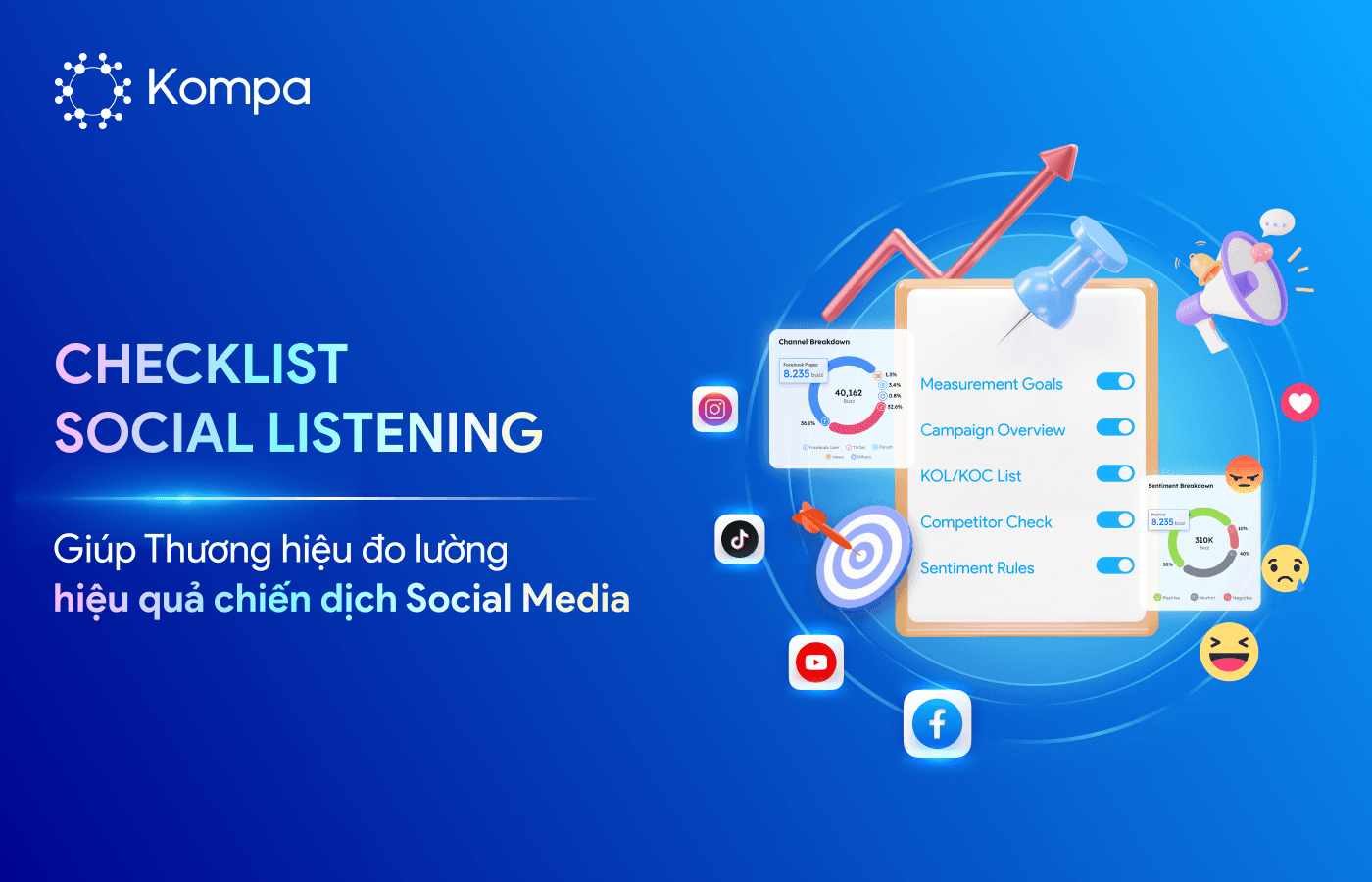
The Social Listening Checklist helps brands measure the effectiveness of social media campaigns
The Social Listening Checklist helps brands measure the effectiveness of social media campaigns
The Social Listening Checklist helps brands measure the effectiveness of social media campaigns
AI & Social Listening 2025: Unlock social data and lead the market with 5 new trends
AI & Social Listening 2025: Unlock social data and lead the market with 5 new trends
AI & Social Listening 2025: Unlock social data and lead the market with 5 new trends
Social Listening on TikTok: Decoding the customer journey and elevating brand strategy
Social Listening on TikTok: Decoding the customer journey and elevating brand strategy
Social Listening on TikTok: Decoding the customer journey and elevating brand strategy
How to use Social Listening to monitor competitors and manage your brand effectively
How to use Social Listening to monitor competitors and manage your brand effectively
How to use Social Listening to monitor competitors and manage your brand effectively
Social Listening Demo & Free implementation consultation
Social Listening Demo & Free implementation consultation
Social Listening Demo & Free implementation consultation
Sustainable brand growth with Kompa
Sustainable brand growth with Kompa
Sustainable brand growth with Kompa
Spot opportunities early – Respond promptly to risks – Optimise communication effectiveness!
Spot opportunities early – Respond promptly to risks – Optimise communication effectiveness!
Spot opportunities early – Respond promptly to risks – Optimise communication effectiveness!
50%
50%
Brand awareness and engagement level
Brand awareness and engagement level
80%
80%
Time to detect and manage a communications crisis
Time to detect and manage a communications crisis
35%
35%
Marketing campaign effectiveness thanks to real-time data
Marketing campaign effectiveness thanks to real-time data
50%
Brand awareness and engagement level
80%
Time to detect and manage a communications crisis
35%
Marketing campaign effectiveness thanks to real-time data


From Social Listening to AI Data Intelligence:
Helping businesses make smart, fast, and comprehensive decisions.
Hotline: 098.130.6460 (Kompa Sales)
Contact for services, quotations, or media partnerships: info@kompa.ai






Copyright © 2025 Kompa.
All Rights Reserved
From Social Listening to AI Data Intelligence:
Helping businesses make smart, fast, and comprehensive decisions.
Hotline: 098.130.6460 (Kompa Sales)
Contact for services, quotations, or media partnerships: info@kompa.ai
Copyright © 2025 Kompa.
All Rights Reserved
From Social Listening to AI Data Intelligence:
Helping businesses make smart, fast, and comprehensive decisions.
Hotline: 098.130.6460 (Kompa Sales)
Contact for services, quotations, or media partnerships: info@kompa.ai
Copyright © 2025 Kompa.
All Rights Reserved