How to use Social Listening to monitor competitors and manage your brand effectively

How to use Social Listening to monitor competitors and manage your brand effectively

How to use Social Listening to monitor competitors and manage your brand effectively

nature and person

As social media grows rapidly, consumers no longer just receive information but also directly participate in creating and spreading content. This is exactly why Social Listening has become an indispensable tool in brand management strategy. So how can Social Listening be used effectively to monitor competitors and, from there, build and manage a brand sustainably? The article below will help you discover the answer.
Monitoring competitors with Social Listening

Understanding competitors is not just an advantage—it is a prerequisite for survival and growth. Social Listening opens the door to a rich source of natural, authentic data on how competitors are operating their communication strategies, positioning products, and building their image in consumers’ minds. Monitoring competitors through Social Listening is not merely about “eavesdropping,” but a journey of comprehensive analysis, information breakdown, and opportunity extraction from real-time data.

Analyze share of coverage (Share of Voice – SOV)

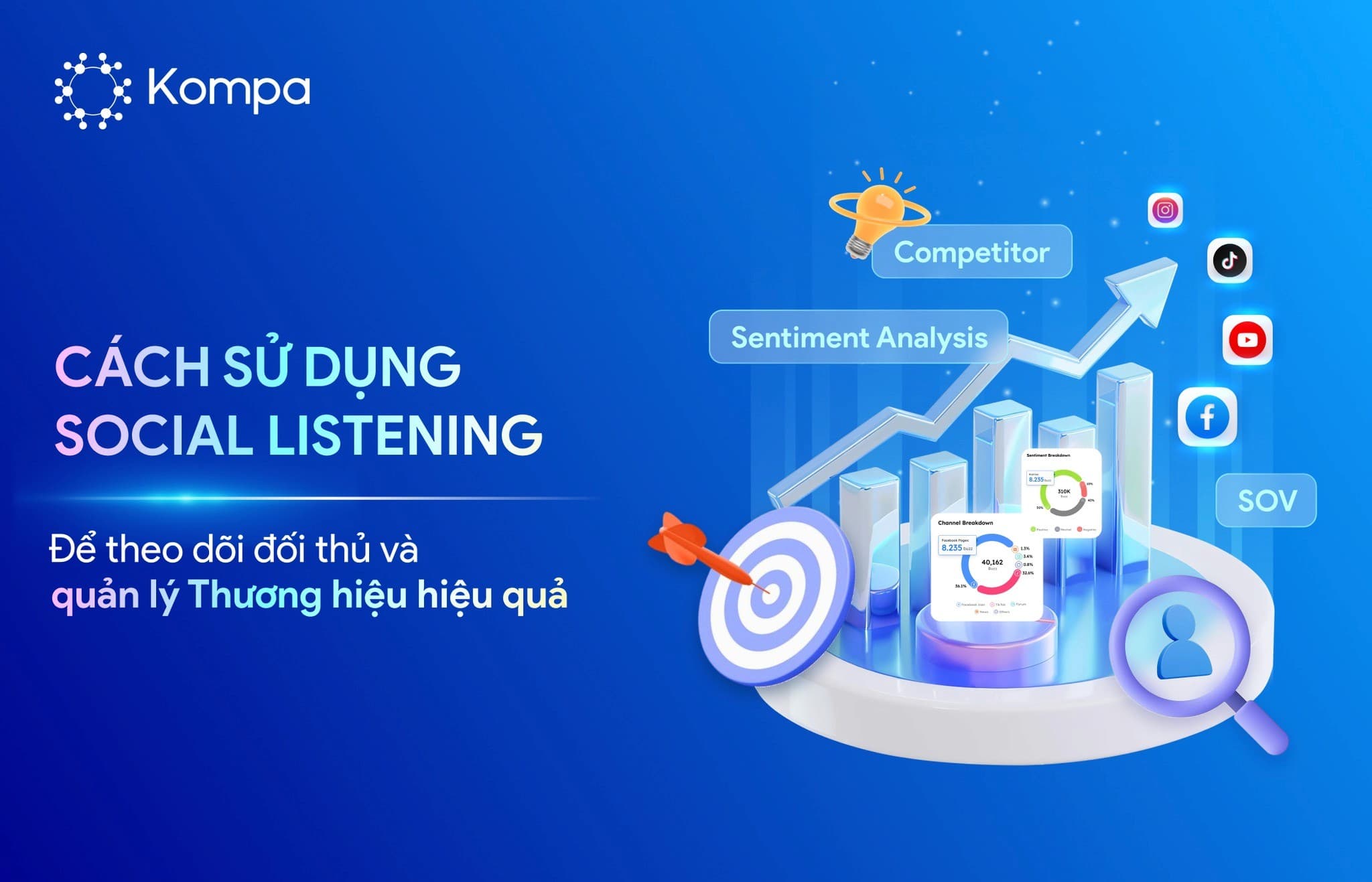
SOV not only reflects how frequently a brand is mentioned compared to competitors, but also serves as an indirect indicator of how much mindshare it occupies among customers. Tracking SOV helps you identify which brand is leading industry conversations and who is generating strong media influence—thereby allowing you to adjust content strategy, campaign timing, or reposition messages appropriately.

Compare brand sentiment (Sentiment Analysis)

Not every mention carries a positive meaning. By analyzing sentiment—positive, negative, or neutral—Social Listening helps brands look deeper into the nature of interactions: are customers satisfied or complaining? What are they expecting that has not yet been met? Comparing sentiment about your brand and competitors is a way to identify their strengths in consumers’ minds, as well as the gaps you can leverage to create differentiation.

Track competitors’ campaigns & media activities

By collecting data on ongoing campaigns—including content, KOL/Influencer collaborations, media channels, and public feedback—brands can “take the pulse” of competitor strategies. More importantly, social media sentiment toward competitors’ media content will reveal what is truly effective and what needs optimization—thereby providing valuable lessons to optimize your own brand’s campaigns.

Identify market “white spaces”

Social Listening also enables the discovery of needs, topics, and trends that competitors have not addressed—but customers are interested in. These are strategic “white spaces,” where brands can shape content, develop products, or tell an entirely new brand story that is pioneering and distinctive.

Manage your brand with Social Listening

Social Listening helps brands not only capture competitors’ moves but also proactively manage their own image and reputation. Businesses can deeply analyze digital data to understand customer expectations, identify communication risks, optimize campaigns, and build their brand sustainably.

Real-time reputation monitoring (Real-time Reputation Monitoring)

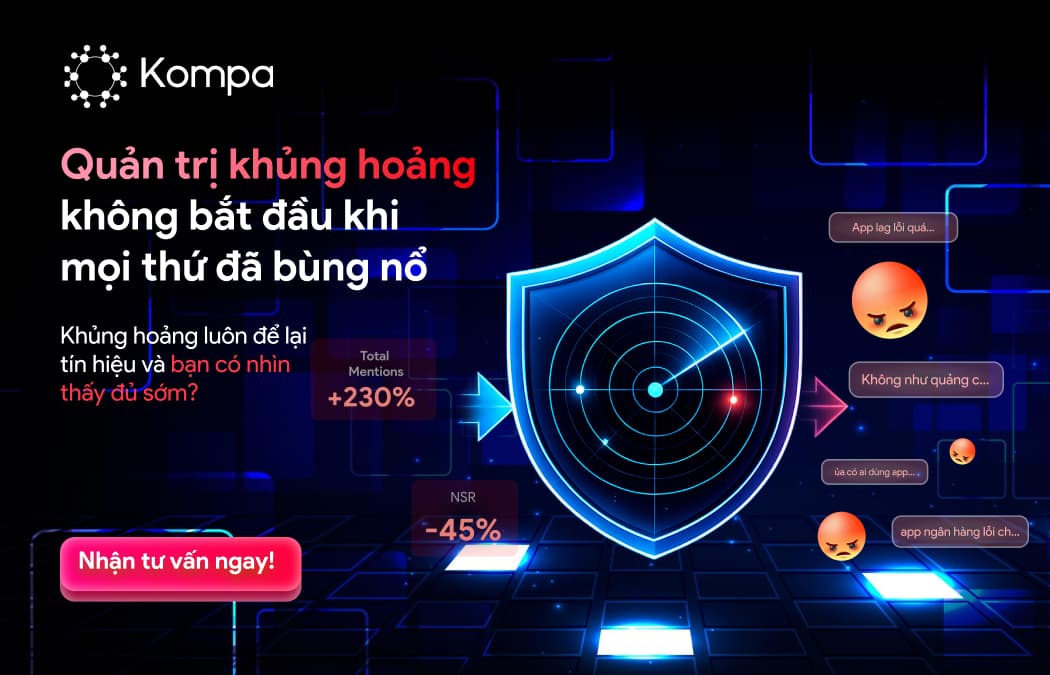
Negative streams of information from social media can erupt into communication crises. Social Listening detects negative signals early, helping brands proactively handle issues, prevent crises, or turn crises into opportunities.

Measure campaign effectiveness through real customer feedback

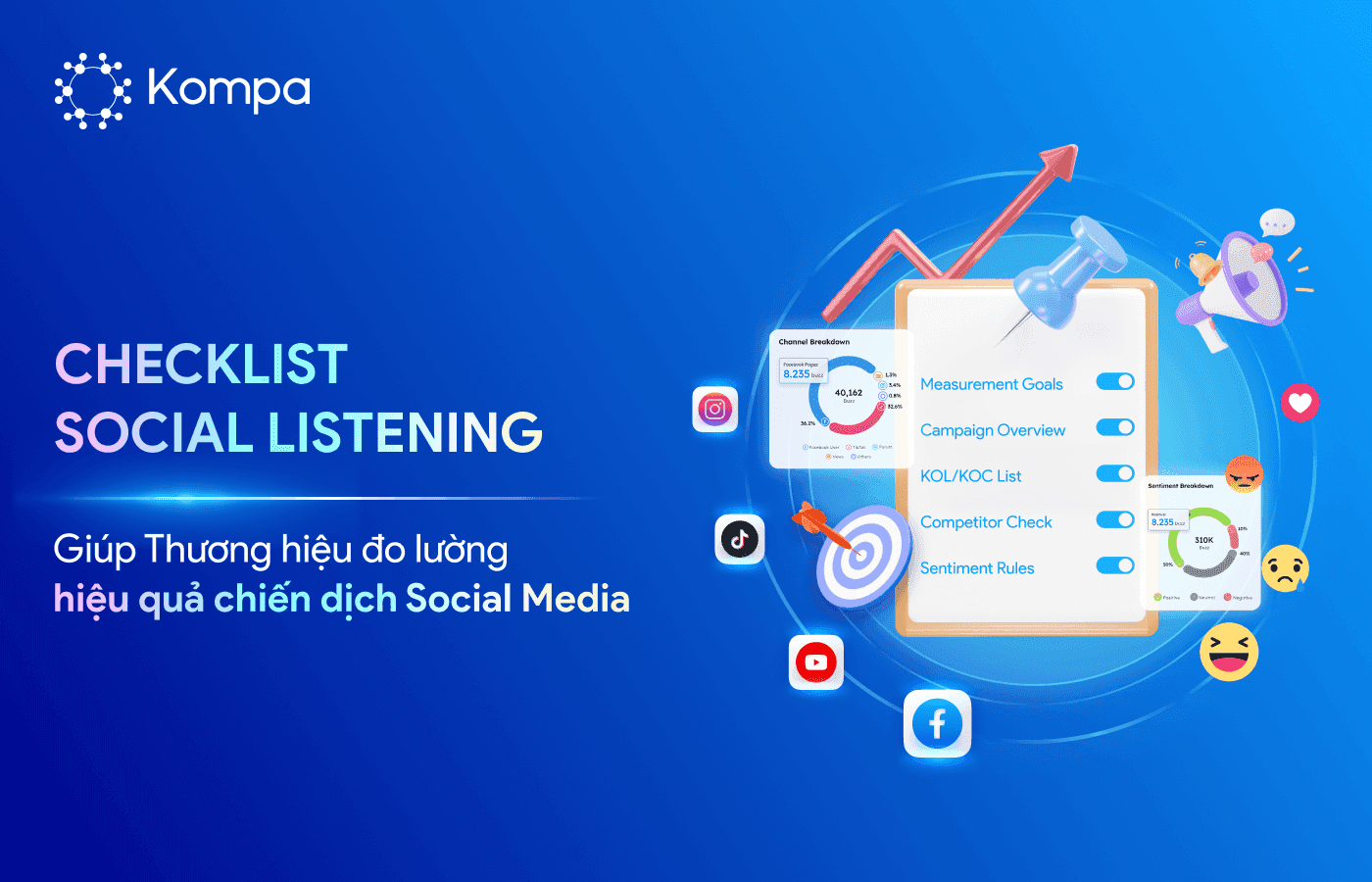
Social Listening gives brands a comprehensive view of how the public on social media is responding to communication campaigns, complementing basic metrics such as reach and engagement. What are customers discussing about the campaign? Are they expressing positive, negative, or neutral sentiment? How are these discussions distributed across Paid – Owned – Earned channels? Within that, what percentage does Earned Media account for, and is it being optimized well? How effective is each specific KOL/Influencer activity? All of this data helps brands not only measure current campaign performance, but also identify strengths and weaknesses in execution, thereby adjusting messages, channels, and resources for the next campaign.

Understand target customer profiles and consumer behavior

From millions of discussions, Social Listening extracts keyword clusters, trending topics, interests, attitudes, and consumer expectations by demographic group. Combined with quantitative metrics, brands can build foundational target customer profiles to design suitable experience journeys or personalize products and services.

Step-by-step application of Social Listening in brand management

The ability to listen to and analyze what consumers are truly interested in, feel, and share—if applied correctly—will help brands clearly understand where they stand, what competitors are doing, and what customers truly expect. Social Listening is not an “all-replacing” solution, but a solid foundation for brands to get closer to customers—with the necessary understanding, companionship, and proactiveness.

With 20 years of experience, Kompa has perfected an AI-Driven Social Listening solution based on a data ecosystem combined with Artificial Intelligence (AI), Natural Language Processing (NLP), and a real-time analytics system. It not only helps businesses collect data, but also supports trend analysis, consumer sentiment analysis, communication effectiveness measurement, and identification of potential market “white spaces.”

As social media grows rapidly, consumers no longer just receive information but also directly participate in creating and spreading content. This is exactly why Social Listening has become an indispensable tool in brand management strategy. So how can Social Listening be used effectively to monitor competitors and, from there, build and manage a brand sustainably? The article below will help you discover the answer.

Monitoring competitors with Social Listening

Understanding competitors is not just an advantage—it is a prerequisite for survival and growth. Social Listening opens the door to a rich source of natural, authentic data on how competitors are operating their communication strategies, positioning products, and building their image in consumers’ minds. Monitoring competitors through Social Listening is not merely about “eavesdropping,” but a journey of comprehensive analysis, information breakdown, and opportunity extraction from real-time data.

Analyze share of coverage (Share of Voice – SOV)

SOV not only reflects how frequently a brand is mentioned compared to competitors, but also serves as an indirect indicator of how much mindshare it occupies among customers. Tracking SOV helps you identify which brand is leading industry conversations and who is generating strong media influence—thereby allowing you to adjust content strategy, campaign timing, or reposition messages appropriately.

Compare brand sentiment (Sentiment Analysis)

Not every mention carries a positive meaning. By analyzing sentiment—positive, negative, or neutral—Social Listening helps brands look deeper into the nature of interactions: are customers satisfied or complaining? What are they expecting that has not yet been met? Comparing sentiment about your brand and competitors is a way to identify their strengths in consumers’ minds, as well as the gaps you can leverage to create differentiation.

Track competitors’ campaigns & media activities

By collecting data on ongoing campaigns—including content, KOL/Influencer collaborations, media channels, and public feedback—brands can “take the pulse” of competitor strategies. More importantly, social media sentiment toward competitors’ media content will reveal what is truly effective and what needs optimization—thereby providing valuable lessons to optimize your own brand’s campaigns.

Identify market “white spaces”

Social Listening also enables the discovery of needs, topics, and trends that competitors have not addressed—but customers are interested in. These are strategic “white spaces,” where brands can shape content, develop products, or tell an entirely new brand story that is pioneering and distinctive.

Manage your brand with Social Listening

Social Listening helps brands not only capture competitors’ moves but also proactively manage their own image and reputation. Businesses can deeply analyze digital data to understand customer expectations, identify communication risks, optimize campaigns, and build their brand sustainably.

Real-time reputation monitoring (Real-time Reputation Monitoring)

Negative streams of information from social media can erupt into communication crises. Social Listening detects negative signals early, helping brands proactively handle issues, prevent crises, or turn crises into opportunities.

Measure campaign effectiveness through real customer feedback

Social Listening gives brands a comprehensive view of how the public on social media is responding to communication campaigns, complementing basic metrics such as reach and engagement. What are customers discussing about the campaign? Are they expressing positive, negative, or neutral sentiment? How are these discussions distributed across Paid – Owned – Earned channels? Within that, what percentage does Earned Media account for, and is it being optimized well? How effective is each specific KOL/Influencer activity? All of this data helps brands not only measure current campaign performance, but also identify strengths and weaknesses in execution, thereby adjusting messages, channels, and resources for the next campaign.

Understand target customer profiles and consumer behavior

From millions of discussions, Social Listening extracts keyword clusters, trending topics, interests, attitudes, and consumer expectations by demographic group. Combined with quantitative metrics, brands can build foundational target customer profiles to design suitable experience journeys or personalize products and services.

Step-by-step application of Social Listening in brand management

The ability to listen to and analyze what consumers are truly interested in, feel, and share—if applied correctly—will help brands clearly understand where they stand, what competitors are doing, and what customers truly expect. Social Listening is not an “all-replacing” solution, but a solid foundation for brands to get closer to customers—with the necessary understanding, companionship, and proactiveness.

With 20 years of experience, Kompa has perfected an AI-Driven Social Listening solution based on a data ecosystem combined with Artificial Intelligence (AI), Natural Language Processing (NLP), and a real-time analytics system. It not only helps businesses collect data, but also supports trend analysis, consumer sentiment analysis, communication effectiveness measurement, and identification of potential market “white spaces.”

As social media grows rapidly, consumers no longer just receive information but also directly participate in creating and spreading content. This is exactly why Social Listening has become an indispensable tool in brand management strategy. So how can Social Listening be used effectively to monitor competitors and, from there, build and manage a brand sustainably? The article below will help you discover the answer.

Monitoring competitors with Social Listening

Understanding competitors is not just an advantage—it is a prerequisite for survival and growth. Social Listening opens the door to a rich source of natural, authentic data on how competitors are operating their communication strategies, positioning products, and building their image in consumers’ minds. Monitoring competitors through Social Listening is not merely about “eavesdropping,” but a journey of comprehensive analysis, information breakdown, and opportunity extraction from real-time data.

Analyze share of coverage (Share of Voice – SOV)

SOV not only reflects how frequently a brand is mentioned compared to competitors, but also serves as an indirect indicator of how much mindshare it occupies among customers. Tracking SOV helps you identify which brand is leading industry conversations and who is generating strong media influence—thereby allowing you to adjust content strategy, campaign timing, or reposition messages appropriately.

Compare brand sentiment (Sentiment Analysis)

Not every mention carries a positive meaning. By analyzing sentiment—positive, negative, or neutral—Social Listening helps brands look deeper into the nature of interactions: are customers satisfied or complaining? What are they expecting that has not yet been met? Comparing sentiment about your brand and competitors is a way to identify their strengths in consumers’ minds, as well as the gaps you can leverage to create differentiation.

Track competitors’ campaigns & media activities

By collecting data on ongoing campaigns—including content, KOL/Influencer collaborations, media channels, and public feedback—brands can “take the pulse” of competitor strategies. More importantly, social media sentiment toward competitors’ media content will reveal what is truly effective and what needs optimization—thereby providing valuable lessons to optimize your own brand’s campaigns.

Identify market “white spaces”

Social Listening also enables the discovery of needs, topics, and trends that competitors have not addressed—but customers are interested in. These are strategic “white spaces,” where brands can shape content, develop products, or tell an entirely new brand story that is pioneering and distinctive.

Manage your brand with Social Listening

Social Listening helps brands not only capture competitors’ moves but also proactively manage their own image and reputation. Businesses can deeply analyze digital data to understand customer expectations, identify communication risks, optimize campaigns, and build their brand sustainably.

Real-time reputation monitoring (Real-time Reputation Monitoring)

Negative streams of information from social media can erupt into communication crises. Social Listening detects negative signals early, helping brands proactively handle issues, prevent crises, or turn crises into opportunities.

Measure campaign effectiveness through real customer feedback

Social Listening gives brands a comprehensive view of how the public on social media is responding to communication campaigns, complementing basic metrics such as reach and engagement. What are customers discussing about the campaign? Are they expressing positive, negative, or neutral sentiment? How are these discussions distributed across Paid – Owned – Earned channels? Within that, what percentage does Earned Media account for, and is it being optimized well? How effective is each specific KOL/Influencer activity? All of this data helps brands not only measure current campaign performance, but also identify strengths and weaknesses in execution, thereby adjusting messages, channels, and resources for the next campaign.

Understand target customer profiles and consumer behavior

From millions of discussions, Social Listening extracts keyword clusters, trending topics, interests, attitudes, and consumer expectations by demographic group. Combined with quantitative metrics, brands can build foundational target customer profiles to design suitable experience journeys or personalize products and services.

Step-by-step application of Social Listening in brand management

The ability to listen to and analyze what consumers are truly interested in, feel, and share—if applied correctly—will help brands clearly understand where they stand, what competitors are doing, and what customers truly expect. Social Listening is not an “all-replacing” solution, but a solid foundation for brands to get closer to customers—with the necessary understanding, companionship, and proactiveness.

With 20 years of experience, Kompa has perfected an AI-Driven Social Listening solution based on a data ecosystem combined with Artificial Intelligence (AI), Natural Language Processing (NLP), and a real-time analytics system. It not only helps businesses collect data, but also supports trend analysis, consumer sentiment analysis, communication effectiveness measurement, and identification of potential market “white spaces.”

Social Listening Demo & Free implementation consultation

Social Listening Demo & Free implementation consultation

Social Listening Demo & Free implementation consultation

Sustainable brand growth with Kompa

Sustainable brand growth with Kompa

Sustainable brand growth with Kompa

Spot opportunities early – Respond promptly to risks – Optimise communication effectiveness!

Spot opportunities early – Respond promptly to risks – Optimise communication effectiveness!

Spot opportunities early – Respond promptly to risks – Optimise communication effectiveness!

50%

50%

Brand awareness and engagement level

Brand awareness and engagement level

80%

80%

Time to detect and manage a communications crisis

Time to detect and manage a communications crisis

35%

35%

Marketing campaign effectiveness thanks to real-time data

Marketing campaign effectiveness thanks to real-time data

50%

Brand awareness and engagement level

80%

Time to detect and manage a communications crisis

35%

Marketing campaign effectiveness thanks to real-time data

From Social Listening to AI Data Intelligence:

Helping businesses make smart, fast, and comprehensive decisions.

Hotline: 098.130.6460 (Kompa Sales)

Contact for services, quotations, or media partnerships: info@kompa.ai

Copyright © 2025 Kompa.
All Rights Reserved

From Social Listening to AI Data Intelligence:

Helping businesses make smart, fast, and comprehensive decisions.

Hotline: 098.130.6460 (Kompa Sales)

Contact for services, quotations, or media partnerships: info@kompa.ai

Copyright © 2025 Kompa.
All Rights Reserved

From Social Listening to AI Data Intelligence:

Helping businesses make smart, fast, and comprehensive decisions.

Hotline: 098.130.6460 (Kompa Sales)

Contact for services, quotations, or media partnerships: info@kompa.ai

Copyright © 2025 Kompa.
All Rights Reserved