Social media is growing rapidly, and consumers no longer just receive information. They now create and share content themselves. This is why Social Listening has become an essential tool in brand management strategy. So how can you use Social Listening effectively to track competitors and build and manage your brand sustainably? This article will help you find the answer.
Tracking Competitors with Social Listening
Understanding your competitors is more than an advantage: it is a prerequisite for survival and growth. Social Listening gives you access to a wealth of organic, authentic data on how competitors run their communication strategies, position their products, and shape their image with consumers. Tracking competitors through Social Listening goes beyond simply “keeping an ear to the ground.” It is a process of analyzing the full landscape, breaking information down, and finding opportunities in real-time data.
Coverage Analysis (Share of Voice – SOV)
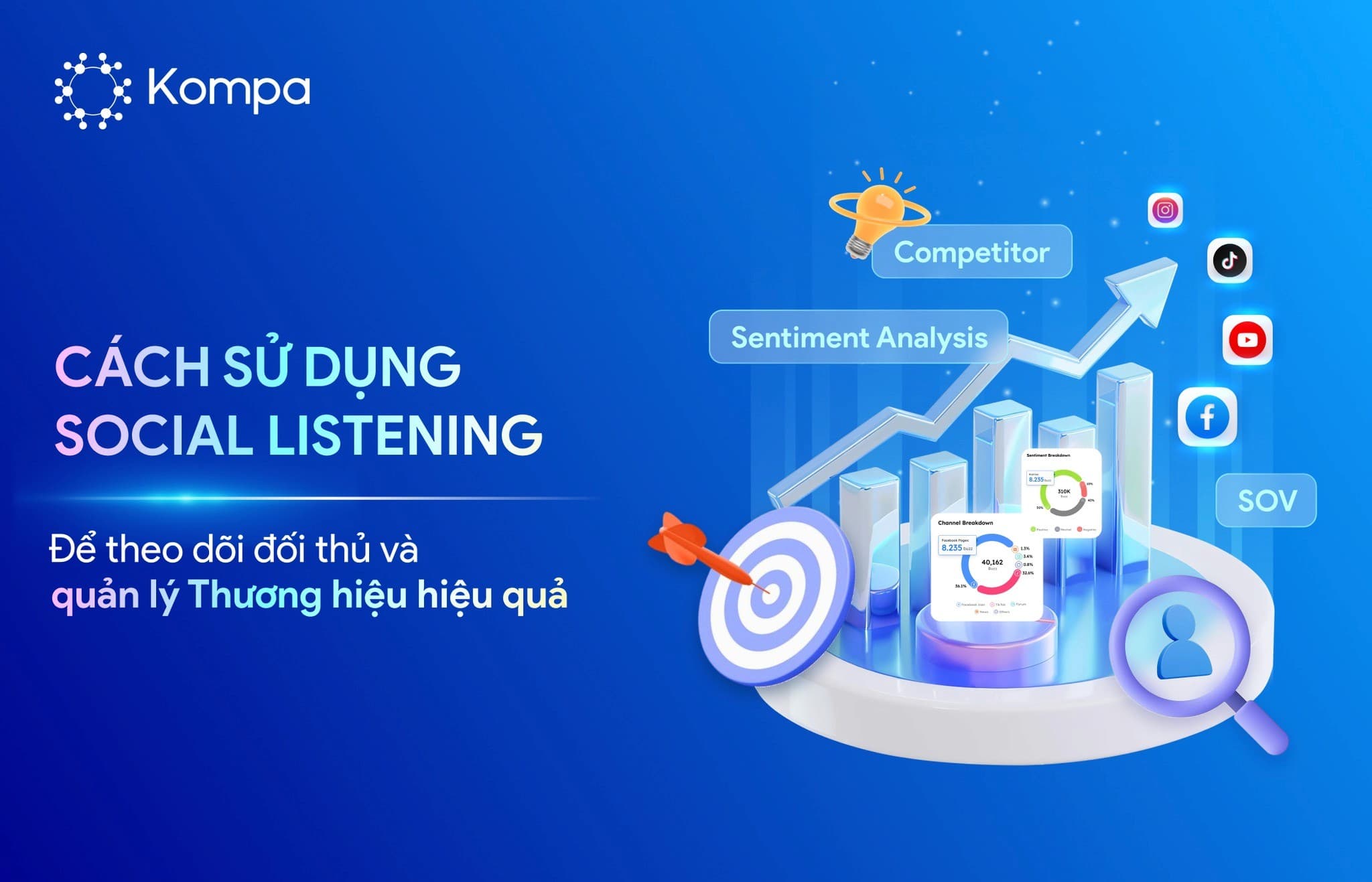
SOV shows how often a brand is mentioned compared with its competitors. It is also an indirect sign of how strongly the brand holds a place in customers' minds. Tracking SOV helps you see which brands are leading the conversation in your industry and who has strong media influence. You can then adjust your content strategy, choose better campaign timing, or reposition your messaging.
Comparing Brand Sentiment (Sentiment Analysis)
Not every mention is positive. By analyzing sentiment as positive, negative, or neutral, Social Listening helps brands understand what is really behind each interaction. Are customers satisfied or complaining? What do they expect that hasn't been delivered yet? Comparing sentiment toward your brand and your competitors shows where competitors are strong in consumers' eyes and where gaps exist that you can use to set yourself apart.
Tracking Competitors' Campaigns & Communication Activities
By collecting data on competitors' current campaigns, including content, KOL/Influencer partnerships, media channels, and public response, brands can “take the pulse” of their competitors' strategies. More importantly, social media reactions to competitors' content show what is actually working and what needs improvement. These are valuable lessons for improving the brand's own campaigns.
Spotting Market “White Space”
Social Listening can also uncover needs, topics, and trends that customers care about but competitors haven't yet addressed. These are strategic “white spaces” where brands can shape their content, develop products, or tell a brand-new story that is pioneering and uniquely their own.
Brand Management with Social Listening
Social Listening helps brands not only keep track of competitors' moves, but also manage their own image and reputation proactively. Businesses can analyze digital data in depth to understand customer expectations, identify communication risks, improve campaigns, and build their brand sustainably.
Real-time Reputation Monitoring
Negative news spreading on social media can turn into a communication crisis. Social Listening detects negative signals early, so brands can act quickly to address them, prevent a crisis, or even turn a crisis into an opportunity.
Measuring Campaign Effectiveness Through Real Customer Feedback
Social Listening gives brands a full view of how social media audiences are responding to a campaign, adding to basic metrics such as reach and engagement. What are customers saying about the campaign? Is their sentiment positive, negative, or neutral? How are these conversations split across Paid, Owned, and Earned channels? What share does Earned Media account for, and is it being used well? How well is each KOL/Influencer performing? All this data helps brands measure the current campaign and also see what worked and what didn't. They can then adjust their messaging, channels, and resources for the next campaign.
Understanding Target Customer Profiles and Consumer Behavior
From millions of conversations, Social Listening pulls out keywords, trending topics, interests, attitudes, and expectations for each demographic group. Combined with quantitative metrics, this lets brands build target customer profiles. These profiles become the basis for designing the right customer journey or personalizing products and services.
Applying Social Listening Effectively in Brand Management, Step by Step
When used well, the ability to listen to and analyze what consumers really care about, feel, and share helps brands understand where they stand, what competitors are doing, and what customers really expect. Social Listening is not a cure-all, but it is a solid foundation that helps brands get closer to their customers with the understanding, support, and initiative they need.
Kompa has refined its solution AI-Driven Social Listening, which is built on a data ecosystem combined with Artificial Intelligence (AI), Natural Language Processing (NLP) and real-time analytics systems. The solution does more than collect data for businesses. It also helps them analyze trends and consumer sentiment, measure communication performance, and find promising “white spaces” in the market.