An admissions campaign is often considered to begin when an institution announces its enrollment plans, opens applications, or launches advertising campaigns. For prospective students, however, the journey starts much earlier.
Long before submitting an inquiry or application, students and parents spend weeks-or even months-searching for information, reading reviews, asking friends for recommendations, and following discussions across social media.
This means that the decision-making process begins long before an educational institution ever sees a lead. By focusing solely on optimizing advertising at the final stage of the enrollment funnel, institutions may miss valuable signals that emerge much earlier.
This is why Social Listening has become an increasingly important tool for helping educational institutions understand prospective students from the moment their interest begins to form.
Stage 1: When Students Begin Thinking About Their Future
At this stage, students are not actively looking for schools-they are asking questions about their future.
They want to know which majors offer promising career opportunities, expected salary levels, and the skills they need to prepare. Parents, meanwhile, are concerned about whether their children are making the right academic choices and what alternatives are available if they do not gain admission to their preferred programs.
These conversations begin long before the admissions season reaches its peak.
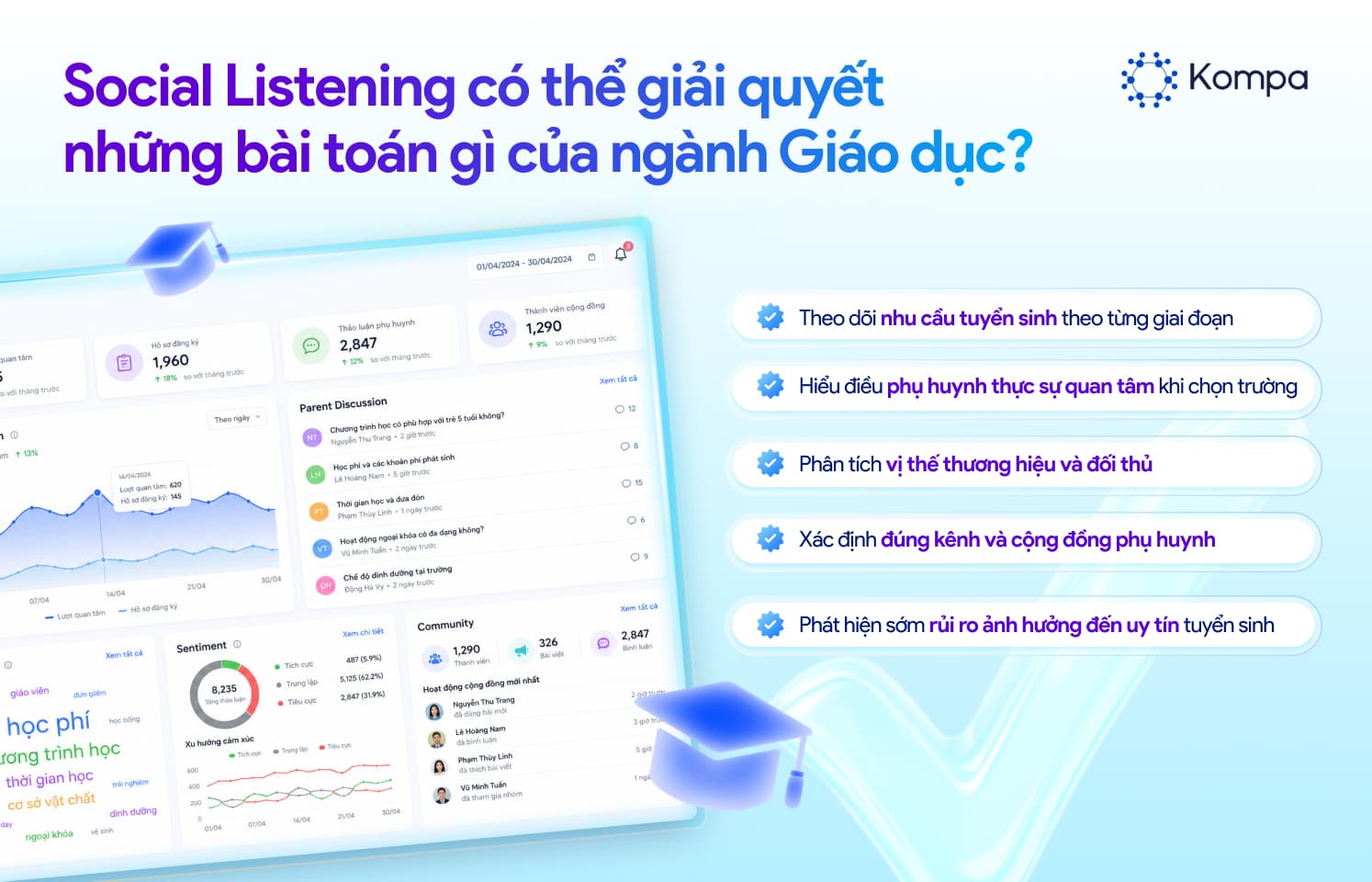
At this stage, Social Listening helps educational institutions identify:
The topics attracting the greatest attention
The recurring concerns within student and parent communities
The information gaps that prospective students are actively seeking to fill
This is the ideal time to publish career guidance, educational insights, and thought leadership content—establishing a trusted presence well before admissions campaigns begin.
Stage 2: When Students Start Evaluating Their Options
Once students have identified a potential career path, they begin comparing universities and academic programs.
Interestingly, conversations at this stage extend far beyond institutional reputation. Students and parents increasingly evaluate practical factors such as tuition fees, graduate employability, scholarship opportunities, learning environments, and industry partnerships.
The findings also suggest that competition among educational brands is shifting from traditional prestige toward measurable graduate outcomes-particularly for institutions with strong employer connections and clear career positioning.
Social Listening helps institutions understand:
Which criteria students use to compare schools
Which strengths are most frequently associated with their own brand
Where competitors hold advantages in the minds of prospective students
These insights enable institutions to refine their messaging and positioning around what truly matters to their audience.
Stage 3: When Emotions Influence Decisions
Choosing a school is not driven solely by academic performance or tuition costs.
Throughout the admissions season, social media is filled with conversations about exam pressure, stress, parental concerns, uncertainty, and anxiety about future career choices. These emotional needs remain among the least addressed in the education market.
Social Listening enables institutions to identify these emotions and develop communications that provide genuine support rather than simply promote academic programs.
Instead of focusing exclusively on program features, schools can create content that reassures parents, helps students cope with exam-related stress, and offers practical career guidance.
By demonstrating empathy and support, institutions build trust before prospective students make their final decisions.
Stage 4: When Students Make Their Final Choice
In the final stage, prospective students rely on much more than official information from educational institutions.
They read student reviews, seek advice from online communities, compare real-life experiences, and observe how institutions respond to topics currently attracting public attention.
Social Listening allows institutions to monitor:
Which types of content generate the greatest trust
Which topics drive positive conversations
How policy changes and broader social trends influence enrollment decisions
For example, discussions surrounding tuition exemption policies illustrate how a single policy change can significantly reshape how parents and students perceive the education market.
Continuously tracking these signals enables institutions to adjust their messaging and communications throughout the admissions season, rather than waiting until the campaign has ended to evaluate results.
Understanding Students Before Talking About Admissions
In higher education, competitive advantage comes from more than academic programs or marketing budgets.
It comes from understanding prospective students before they make their decisions.
Social Listening is not a replacement for surveys, market research, or the expertise of admissions teams. Instead, it complements these methods by capturing the authentic voices of parents, students, and current learners throughout the school selection journey.
When these conversations are analyzed systematically, educational institutions gain more than an understanding of what people are saying. They can identify where prospective students are in their decision-making journey, understand the concerns influencing their choices, and recognize the moments when their brand should engage.
Kompa Supports Educational Institutions Throughout the Entire Admissions Journey
From monitoring the evolving needs of parents and students, analyzing trends in major selection, evaluating brand perception, to measuring student experience after enrollment, Kompa helps educational institutions transform Social Listening data into smarter decisions across admissions, brand building, and academic program development.