Social Media & The Maternity Journey – The Key to Engaging Expectant Mothers with Brands
As social media continues to reshape consumer behavior, the latest report from Kompa has analyzed over 300,000 public discussions regarding maternity hospital communications in Vietnam.
As social media reshapes consumer behavior, the latest report from Kompa has analyzed over 300,000 public discussions related to maternity hospital communications in Vietnam. The report provides not only a market overview but also suggests effective communication strategies for healthcare brands to "truly connect" during the emotional motherhood journey of modern women.
From being "cared for" to "leading the maternity journey"
One of the most important mindset shifts highlighted by the report is: pregnant women today are no longer passive subjects in the childbirth journey, but proactive individuals who research, compare, and make decisions—from choosing hospitals and doctors to delivery methods. They seek not only medical safety but also emotional peace of mind and community connection.
The topic of "C-section/fetal extraction" accounted for 73,616 discussions, significantly outperforming other topics such as prenatal checkups, vaccinations, or testing.
Anxiety factors are not limited to surgery, but also include postpartum recovery, newborn care, and especially the psychological impact of being unable to give birth naturally.
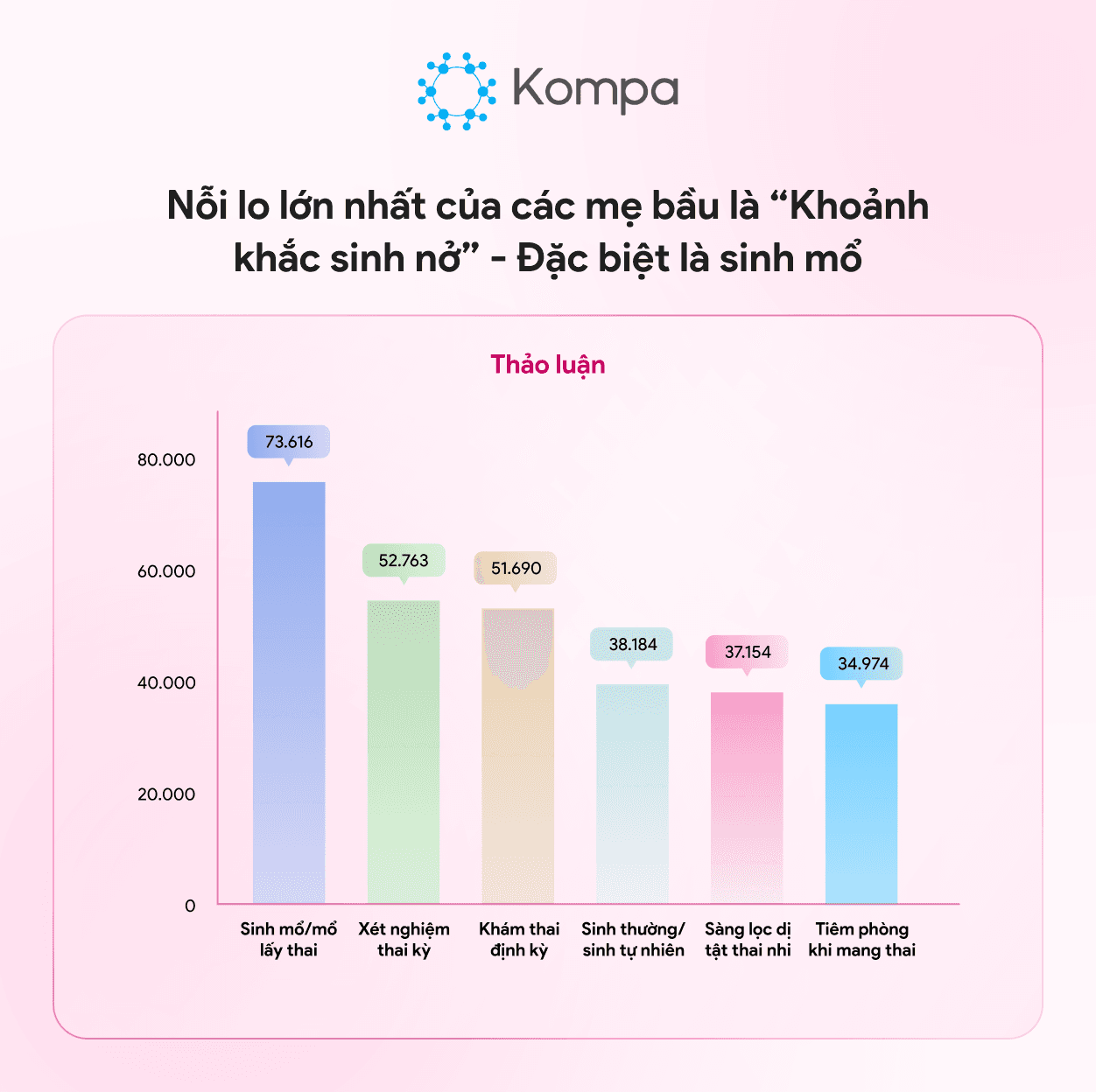
This requires hospital brands to do more than just provide medical services; they must offer emotional companionship, "touching" the silent anxieties of pregnant women—especially during critical transitional stages.
Gen Z is gradually "stepping into" the motherhood journey
Although they account for only 24.5% of discussions, the Gen Z group has begun to show early interest in the motherhood journey. They do not just search for information on social media platforms, but are also a force capable of high content virality through TikTok, short videos, podcasts, and interactive formats.
The differentiator for Gen Z is proactive curiosity, high personalization, and a preference for "real" community content over traditional advertisements. This represents a strategic window of opportunity for hospitals if they know how to design appropriate content and position themselves as a "smart companion" throughout pregnancy.
Emotional Touchpoints on the Pregnancy Journey – A New Growth Strategy for Brands
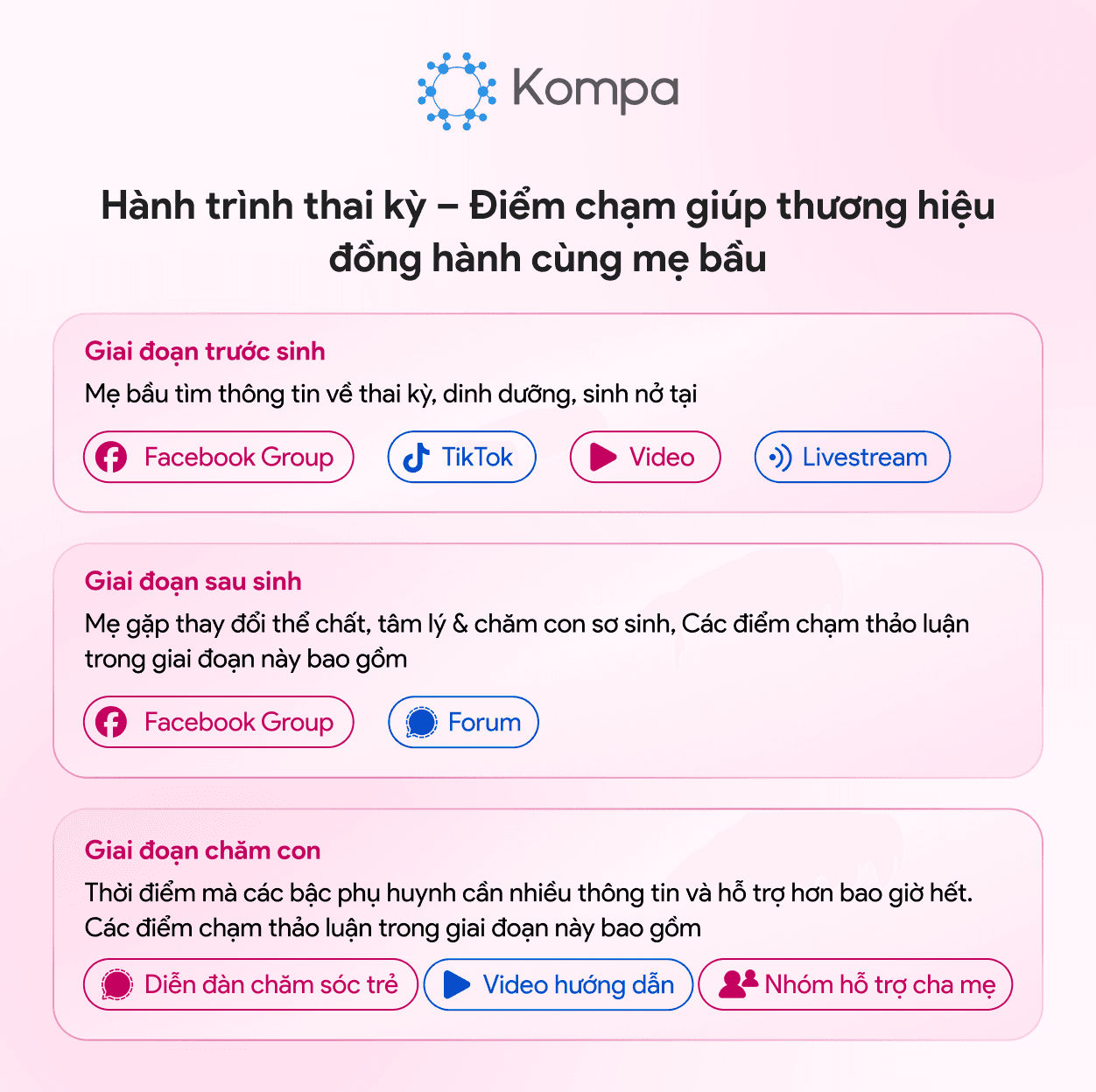
Brands that communicate effectively at emotional touchpoints during pregnancy will achieve strong virality and maintain long-term positive sentiment within the motherhood community. From AIH and Hanh Phuc to Hung Vuong, each hospital has a different approach—but they share commonalities:
They appear where pregnant women discuss: Facebook Groups, TikTok, forums, etc.
They convey messages through the voice of the community: celebrities sharing their childbirth journeys, doctors consulting via livestream, and mothers sharing real experiences.
They maintain a high Net Sentiment Rate (NSR): Hanh Phuc reached 94%, AIH reached 87%.
This is clear evidence that: brand trust does not come from advertising, but from emotional resonance.
Conclusion: Healthcare Communication for Mothers – A Journey of Empathy with Pregnant Women
For pregnant women, social media is not just a place to search for information—it is where they seek peace of mind, companionship, and understanding. Only when a brand can listen deeply, appear at the right time, and speak the language of emotion can it transform interest into a choice—and a choice into long-term loyalty. Kompa believes that data is not just numbers—it is the compass for brands to move in the right direction on this deeply human journey.
This report was researched specifically for maternity hospital brands. Register now to receive the full detailed analytical data, including visual charts, maternity journey discussion maps, channel lists, communities, KOLs, reputable doctors, and communication strategy suggestions tailored to each age group and emotional stage.
You may also be interested in
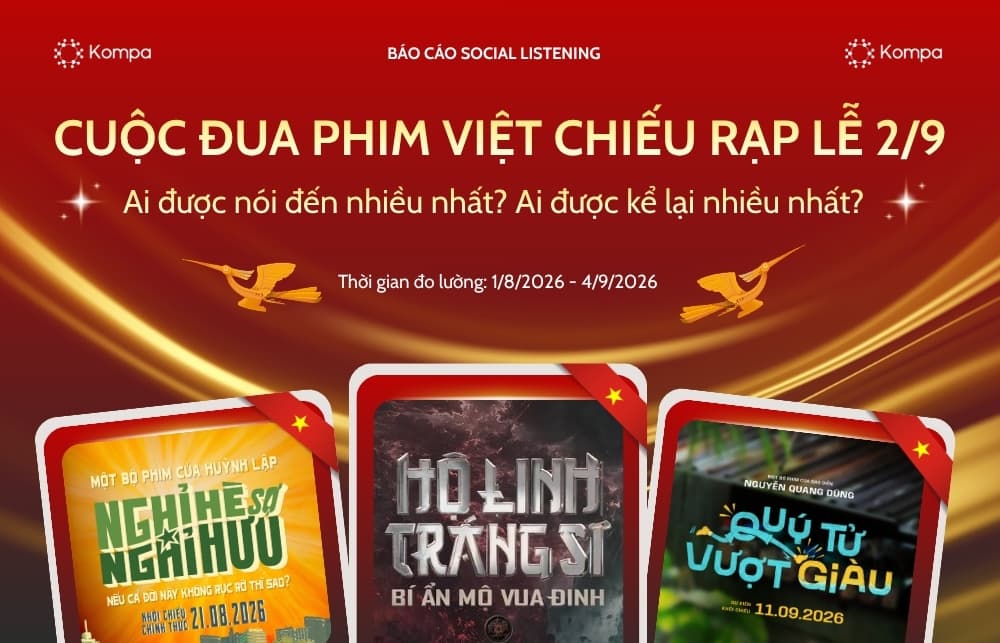
DECODING THE SOCIAL ECHO OF VIETNAMESE THEATRICAL FILMS DURING THE SEPTEMBER 2 HOLIDAY THROUGH 678,411 DISCUSSIONS
Real Estate Market Shifts: From Price Appreciation Expectations to Cash Flow Challenges