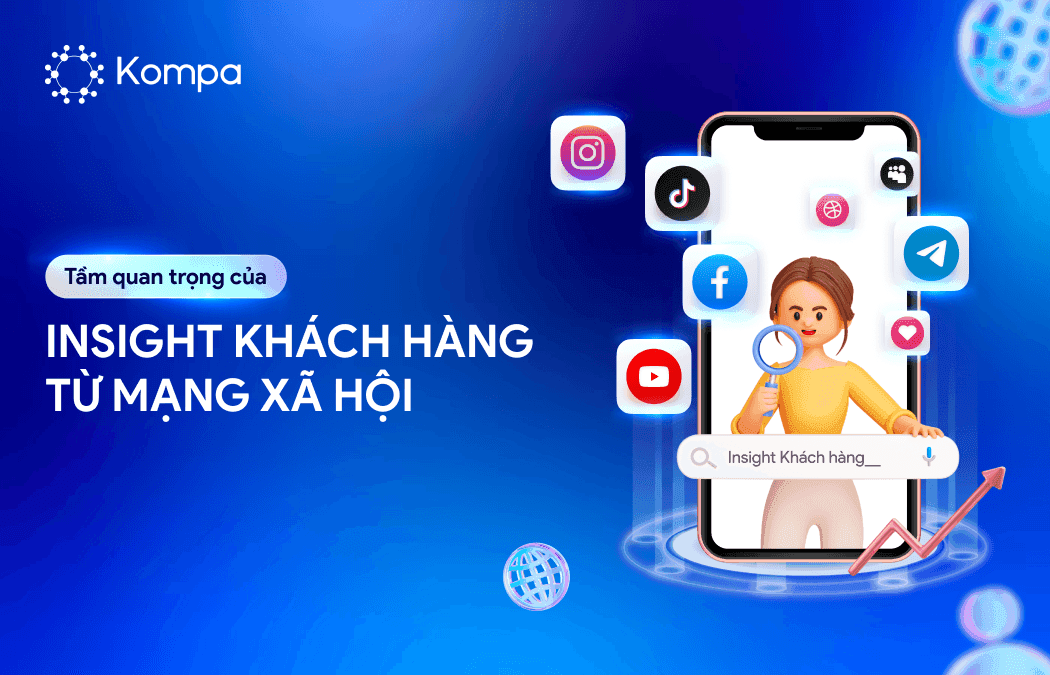
Social media is not just a place where users go to “be entertained” or “interact.” It is also a living data repository full of valuable insight, offering an authentic, natural and real-time portrait of consumers. Insight from social media is valuable not only because of its sheer volume, but because it reflects users’ genuine emotions, behaviors and expectations in the context of their everyday lives. Most importantly, when harnessed correctly, social media insight can become a “game changer” for communication strategy and brand positioning – from shaping messaging and creating content to triggering consumer emotions and actions.
What types of insight can brands extract from social media?
Social media is where consumers share their feelings, recount real experiences, spread their outlook on life and react to brands in a completely natural way. By listening deeply enough and analyzing in the right direction, brands can gather many types of insight that help refine communications, develop products or position the brand. Below are 4 common and essential groups of insight that can be drawn from social media users’ behaviors and conversations:
Consumer Truth – Deep truths about consumers
Social media users often express very human, very real desires – such as wanting to take better care of themselves, wanting peace of mind for their families, or simply wanting to feel confident. They share these feelings through public posts about content they love, social trends and hot topics that capture widespread community attention… This insight helps brands create emotional content that speaks directly to the reasons customers care.
Tension Insight – Unresolved contradictions
On social media, users don’t just share what they like – they also frequently reveal their hesitation, indecision and inner conflict in consumer choices: wanting to eat healthily but lacking time to cook, wanting to buy quality products but fearing going over budget, or wanting to live minimally yet being unable to resist the urge to “check out a discounted order.” Users express these “tensions” through posts sharing real-life experiences, comments in consumer groups, and reviews under unboxing videos. These signals help brands identify emotional and psychological barriers, enabling them to create solutions better suited to customers’ real-life contexts and to build more empathetic, relatable content.
Cultural/Social Insight – Cultural and social truths
Social media is a place where users not only consume information but also create and spread new cultural values. In every post, every hashtag, every fleeting trend or prolonged debate, people express how they see society, themselves, and the norms they follow – or are trying to break.
From trends like “normalizing failure” and “quitting your job to heal” to the wave of support for diversity in body type, ethnicity and gender – all of these began as personal posts but quickly became a collective voice. That is when cultural insight takes shape. Understanding cultural insight helps brands not only fit in but also steer the conversation with the community – in a respectful, empathetic and timely way.
Brand Insight – How users perceive the brand
In the online world, brands are no longer “defined” by themselves – but by consumers’ experiences and perceptions. Consumers may not say much, but a single short comment, a product "unboxing" video, or a story retold on TikTok… is enough for the community to form impressions and pass judgment on a brand. Brand insight helps brands see themselves through the customer’s lens – to understand which strengths to build on and which areas need further improvement.
Is insight from social media truly valuable?
The answer is yes – and beyond expectations – if brands know how to harness it properly. Compared with traditional surveys, which suffer from time lags and tend to be formulaic, social media reflects consumers’ thoughts and emotions in real time and in a natural context. It is an authentic data source – because social media users tend to share both good and bad experiences, expectations and disappointments, which helps brands see both the visible and hidden sides of consumer psychology.
Moreover, social media insight has practical value across product development, brand positioning and communication content creation, all the way to optimizing each touchpoint along the customer journey. Thanks to its immediacy and multidimensional nature, this insight also helps brands respond faster to market changes, catch trends at the right moment and manage communication crises.
How to extract customer insight from social media
1. Social Listening
Social Listening is the foundational method for brands to clearly understand public opinion and customer sentiment in real time. Brands can track millions of public conversations across platforms such as Facebook, TikTok, Instagram, Threads, YouTube… Monitoring keywords related to the brand, industry, products or social issues helps brands capture content trends and identify existing pain points in the customer journey. In addition, Social Listening enables analysis of user sentiment (positive, negative, neutral), providing a comprehensive view of how the brand is being received and allowing performance comparisons with competitors.
2. UGC (User-Generated Content) Analysis
UGC (user-generated content) is a vivid and authentic source of data, where customers share their personal impressions of products, services, or their own consumption experiences. These genuine posts, videos, and comments help brands see customers' real-world experiences more clearly, rather than relying on internal assumptions. Beyond that, UGC also reflects the emotional values customers associate with a brand, such as trust, joy, or a sense of security. By analyzing UGC at scale, brands can also identify recurring content patterns, which are valuable for guiding creative direction or optimizing products.
3. Analyzing Community and Discussion Group Content
Specialized communities and groups on social media, such as “Nghiện nhà” and “Tâm sự eva”, along with niche groups (young mothers, office workers, gamers, startups, and more), are where users express their true thoughts and discuss topics in greater depth than on open platforms. They are a valuable source of Insight that helps brands explore group-specific consumer behavior, distinctive interests, and hidden purchase motivations. In personal stories and everyday conversations, brands can uncover unmet needs. More importantly, group discussions help brands understand how products are used in real life, so they can improve the user experience.
4. Applying AI/ML Technology to Process Big Data
Social media generates enormous volumes of data every day, so artificial intelligence (AI) and machine learning are essential for effective analysis. AI not only helps brands classify topics and filter out noise but can also detect emerging trends, segment consumers by behavior, and even build models that forecast future trends (predictive insight). When properly trained, AI can “read” customer emotions and offer strategic recommendations tailored to each stage of the buyer journey.
Kompa has built a comprehensive data ecosystem, combining Artificial Intelligence (AI), Natural Language Processing (NLP), and real-time analytics systems to deliver modern AI-Driven Social Listening solutions. Beyond collecting and aggregating information, Kompa helps businesses interpret, predict, and act based on market signals.
From detecting trends early, analyzing consumer sentiment, and measuring brand health to identifying communication risks, Kompa delivers deep, flexible, and agile insights, creating a superior competitive advantage for businesses in an ever-changing digital era.
Customer Insight from Social Media: The Essential Key to Brand Resilience in the Digital Era
Consumer behaviors, emotions, and beliefs all leave traces on social media. Listening strategically not only helps brands truly understand their users, but also stay ahead of the market. However, extracting insights from social media requires technological capability, deep analytical thinking, and sensitivity to the socio-cultural context. This is where platforms like Kompa become trusted data partners, helping businesses not only “hear” but also “understand clearly and act correctly” – so that every communication decision and every message released to the market meets consumer expectations.