Every month, FMCG brands launch multiple marketing campaigns, collaborate with influencers, introduce new products, and invest heavily in advertising.
After each campaign, businesses typically evaluate performance using metrics such as Reach, Impressions, Engagement, and Video Views.
But there is a more important question:
Did the campaign truly influence consumers?
A campaign may generate millions of impressions without sparking meaningful conversations. Meanwhile, another campaign with a smaller budget may inspire consumers to actively share, discuss, and remember it long after it ends.
This is why Social Listening has become an increasingly essential tool for FMCG companies to evaluate communication effectiveness from the consumer's perspective.
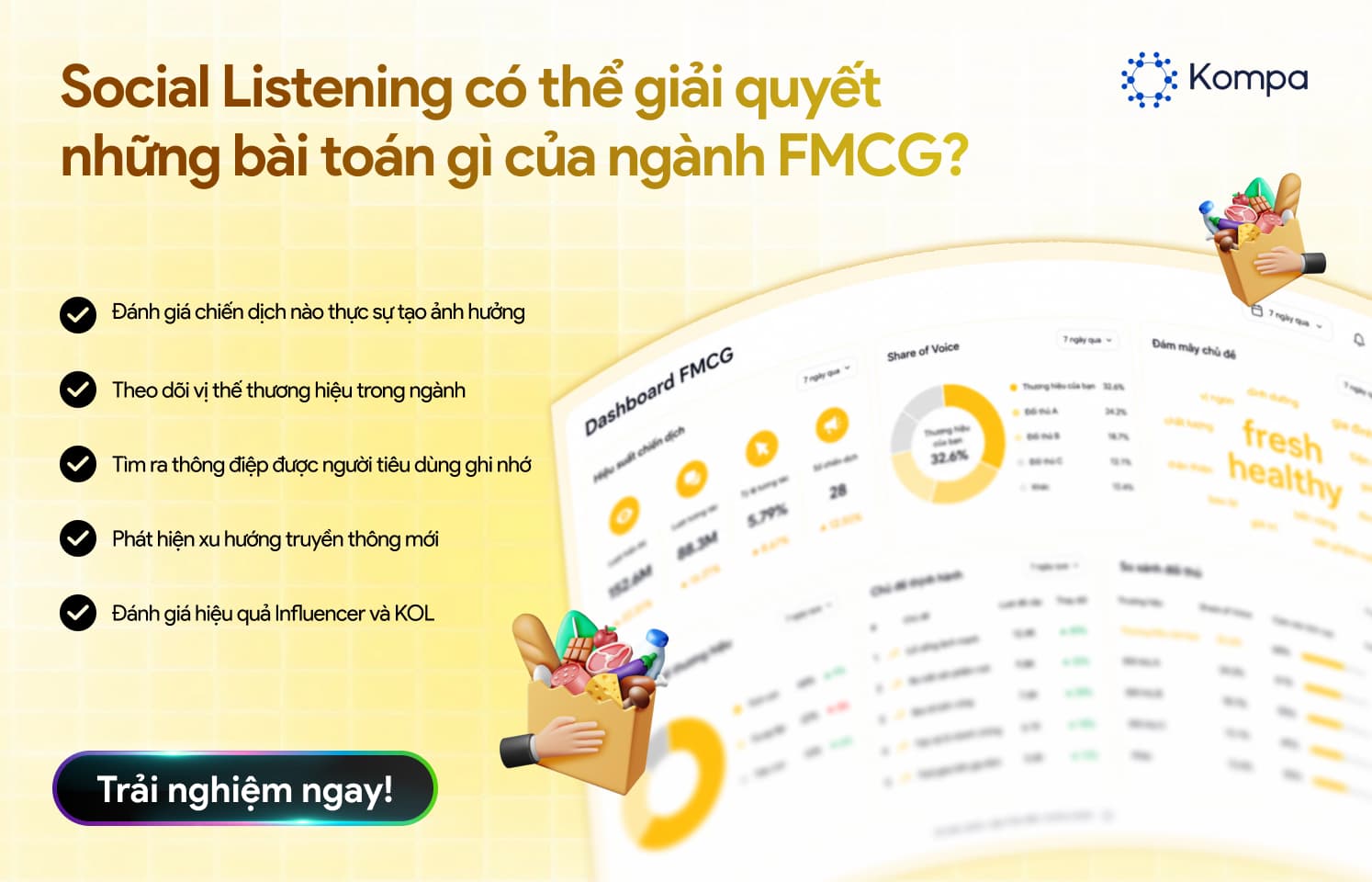
1. Identify Which Campaigns Truly Made an Impact
A campaign's success is not measured solely by the number of impressions it generates.
More importantly, it depends on how often the brand becomes part of consumers' organic conversations.
Social Listening helps businesses answer questions such as:
Which campaign is consumers talking about the most?
Which content generates the highest volume of comments and shares?
What emotions are consumers expressing after the campaign?
Does the campaign continue to be mentioned after the media push has ended?
These are insights that traditional marketing metrics often struggle to capture.
2. Evaluate Your Brand's Position in the Market
No brand competes in isolation.
Consumers naturally compare brands when evaluating products, prices, and user experiences.
Social Listening enables businesses to understand:
Whether their Share of Voice is increasing or declining.
Which competitors dominate consumer conversations.
Which topics help their brand stand out.
Where communication gaps exist that can be leveraged.
Instead of only knowing what the brand is saying, businesses gain a clear understanding of what the market is saying about them.
3. Discover Which Messages Drive the Best Results
Not every piece of content delivers the same value.
Some brand messages remain memorable for consumers, while others generate little to no discussion.
Through Social Listening, businesses can identify:
Which topics generate the highest engagement.
Which messages are most frequently repeated.
Which product lines attract the greatest consumer interest.
What motivates consumers to voluntarily share their experiences.
These insights provide a solid foundation for optimizing messaging in future campaigns.
4. Detect Emerging Communication Trends
The FMCG market evolves rapidly.
A new consumer trend, a viral TikTok movement, or a social issue can quickly create new opportunities for brands.
Social Listening helps businesses:
Track fast-growing conversation topics.
Discover emerging consumer insights.
Identify early shifts in purchasing behavior.
Adjust communication strategies before trends reach their peak.
Rather than reacting after the market changes, brands can proactively lead the conversation.
5. Measure Influencer and KOL Effectiveness
Influencer marketing now represents a significant portion of communication budgets for many FMCG companies.
However, not every influencer creates the same level of impact.
Social Listening enables businesses to evaluate:
Which influencers generate the most consumer conversations.
Whether consumer responses are positive or negative after the campaign.
Which content drives the highest level of organic engagement.
How much each KOL contributes to the campaign's overall communication performance.
This allows businesses to optimize future influencer selection based on real impact rather than simply follower count.
Consumer Data Only Matters When It Drives Action
In the FMCG industry, competitive advantage is no longer defined solely by marketing budgets or media exposure. It increasingly depends on how quickly a brand understands consumers compared to its competitors.
Social Listening goes beyond monitoring online conversations. It transforms consumer-generated data into actionable decisions across branding, content, campaigns, and communication strategies.
Kompa partners with FMCG businesses throughout this entire process—from evaluating campaign performance and analyzing brand positioning to tracking Share of Voice, identifying emerging trends, and optimizing influencer and communication strategies in real time.